VIDEO REVIEW: Tesla Model Y L: The 6-seater variant of the popular electric SUV arrives in Australia
- AI, ai coding assistant, AI regulation, Artificial Intelligence, openai, Reviews, Tech, Technology, Tesla, Vehicles
- March 29, 2026


David Fajgenbaum discovered how to repurpose a drug to treat his own rare disease and has dedicated much of his career to repurposing drugs. Credit: Noam Galai/Getty Images for Clinton Global Initiative As a child, molecular biologist Francesca Granata had episodes of skin pain so excruciating that she could not bear even a hug from
READ MORE
The US National Science Foundation has been a major funder of basic science in the United States. Credit: Mark Schiefelbein/AP Photo/Alamy The US National Science Foundation (NSF) will award about 30% fewer new research grants this fiscal year than in the last one, Nature has learnt. The steep drop continues a pattern that began last
READ MORE
Paper introductions and discussions show more signs of AI use than results sections. Credit: Laurence Dutton/Getty The use of artificial intelligence to write scientific papers could be much more prevalent than was previously thought. That’s the upshot of a study that estimates that almost nine out of ten papers published in December 2025 in a
READ MORE
The US National Institutes of Health has put forward a plan to change how it ranks research proposals and decides which ones to fund.Credit: Timon Schneider/Alamy The US National Institutes of Health (NIH) has proposed overhauling how it decides which research projects to fund, and how it reports the outcome of those deliberations. For the
READ MORE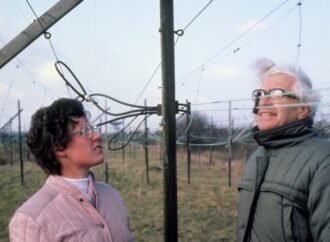
Astronomers Jocelyn Bell Burnell and Antony Hewish discovered pulsar stars using a radio telescope constructed near Cambridge, UK.Credit: Hencoup Enterprises/Science Photo Library The Engine of Scientific Discovery: How New Methods and Tools Spark Major Breakthroughs Alexander Krauss Oxford Univ. Press (2026) Popular accounts of notable scientific breakthroughs (including artificial intelligence) often portray them as the
READ MORE
In 2019, after quitting a faculty job in response to bullying, I co-founded the Academic Parity Movement with environmental activist Saya Ameli Hajebi. We built the organization to give researchers somewhere to turn when their own institutions did not listen to or, worse, betrayed them. Seven years and several thousand case reports later, I have
READ MORE