With the revelation that ICE will spend up to $20 million by March on gloves that can deliver painful electric shocks to subdue an individual, according to a notice published earlier this week by the Department of Homeland Security, it’s worth looking at how this apparel, designated as a nonlethal tool for law enforcement, actually
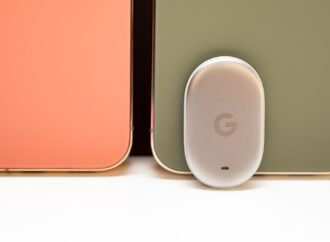
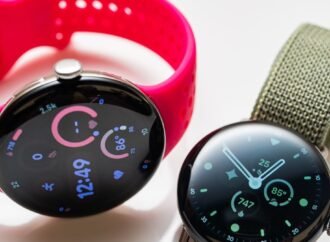
As for the hardware itself, much of Google’s efforts this year seem to revolve around speeding things up and improving performance. Powered by Qualcomm’s Snapdragon W5 Gen 2 Accelerated chip with a Cortex-M55 co-processor, Google says the Pixel Watch 5 offers 20 percent faster processing. The dual-band GPS is also twice as accurate at route
Google’s first smartwatch debuted just four years ago, and at the time, the company went to great lengths to stress the accuracy of the Pixel Watch’s heart rate sensor. Even if Google was late to the wearable party compared to peers like Apple and Samsung, that focus on heart rate seems to be paying off
There is a new A pair of cameraless smart glasses in the city: the Halliday G2, designed for listening to workplace meetings, absorbing what’s happening and summarizing all the interesting parts, as if they were always-listening wearable devices. Halliday says the microphones can be turned on for meetings, using AI voice commands, or making phone
I would have bought a wearable health tracker much sooner if they weren’t all so ugly. I don’t want a glowing screen on my wrist, and the Whoop woven bracelet looks like something I would have made at summer camp. But in recent months, both RingConn and Oura have released slimmer hardware that actually matches
Chris Harrison, director of the Future Interfaces Group at Carnegie Mellon University, doesn’t think the new subscription will help pay for Meta’s AI spending. “The industry has made enormous strides, even in the last six months, but certainly in the last 18 months, improving the efficiency of token generation and running these models much more