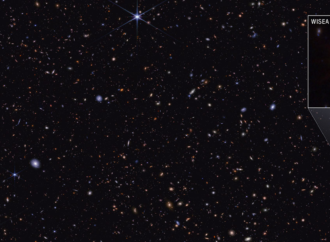
Since their discovery by NASA’s James Webb Space Telescope in 2022, small red dots (LRDs) have been the subject of great interest to astronomers. Understanding the nature of these compact and extremely distant red sources has been a perplexing scientific endeavor. One popular theory is that the small red dots are supermassive black holes known
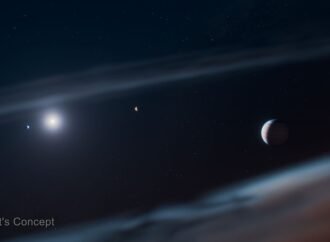
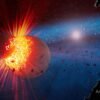
Astronomers using NASA’s James Webb Space Telescope have discovered a giant planet outside our solar system, called an exoplanet, hidden within one of the most intensively studied planetary systems in our Milky Way galaxy. The nearby young star Beta Pictoris was already known to host two giant planets: Beta Pictoris b, one of the first
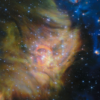
Last September, JWST took this image of a protostellar jet on the outskirts of the Milky Way. From tip to tip, the jet extends about twice the distance from the Sun to its nearest neighboring star system, α Centauri.Credit: NASA, ESA, CSA, STScI, Yu Cheng (NAOJ); Image processing: Joseph DePasquale (STScI) Of the black holes
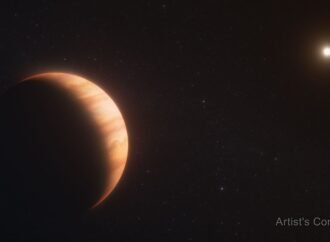
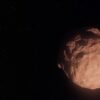
NASA’s James Webb Space Telescope gives us new insights into the distant future of solar systems like ours, as the agency continues to reveal the secrets of the universe and our place in it. Billions of years ago, a Sun-like star nearing the end of its life grew enormously in size to become a red
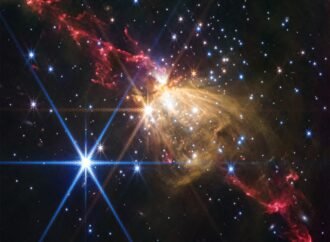
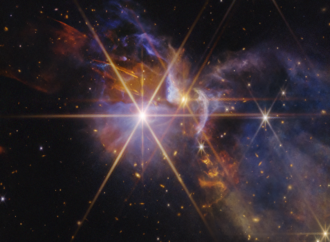
NASA’s James Webb Space Telescope has captured infrared light from numerous features that were previously impossible to see beyond the thick dust of the FS Tau star system. In addition to the countless background galaxies that come into view like fireworks for America’s 250th anniversary celebrations, this image flickers with a series of protostars, or