Tesla has used a submission to a Senate inquiry to push for Australia’s long-delayed autonomous vehicle laws to be brought forward. In Submission 258 to the Senate Select Committee on Productivity in Australia, dated 16 October 2026, Tesla asks the Commonwealth to accelerate the proposed Autonomous Vehicle Safety Law (AVSL) from what it calls the
Tesla has used a submission to a Senate inquiry to push for Australia’s long-delayed autonomous vehicle laws to be brought forward. In Submission 258 to the Senate Select Committee on Productivity in Australia, dated 16 October 2026, Tesla asks the Commonwealth to accelerate the proposed Autonomous Vehicle Safety Law (AVSL) from what it calls the “current expected implementation of 2029” to 2027. It also wants the Commonwealth to support an autonomous vehicle trial on public roads in 2027.
The submission was first spotted by @kianchong on X, and it’s worth reading in full. Autonomy is only one part of it. Tesla also makes eight recommendations covering charging, heavy electric trucks, low-carbon fuels and road user charging, but the AV section is the one most likely to get attention.
What Tesla is asking for
The two AV recommendations sit at the end of Tesla’s list.
Recommendation 7 is the near-term ask, a trial in 2027 under permits that would apply until the national framework is ready.
“Support an autonomous vehicle trial in 2027, working with industry to grant permits to unlock AV trials on public roads until such time that the national regulatory framework for AVs is in place.”
Tesla submission
Recommendation 8 is about the law itself.
“Work with State/Territory governments to accelerate the proposed Autonomous Vehicle Safety Law (AVSL), including via streamlined federal-state/territory coordination mechanisms and technical standards development.”
Tesla submission
In the body of the submission, Tesla asks the Committee to “add your voice to calls to prioritise and accelerate” the AVSL. It says bringing implementation forward by two years would save hundreds of lives and unlock more than A$10 billion in safety, productivity, environmental and economic benefits.
Tesla attributes that figure to independent modelling by the Autonomous Vehicle Association of Australia that was “previously shared with the Government”. It also cites Federal Government research estimating AVs could save up to 800 lives a year at full adoption. Neither the modelling nor that research is attached or footnoted in the submission, so I haven’t been able to check either number.
Tesla frames the whole thing around road safety.
“After Australian road fatalities sadly hit a 15-year high in 2025, advanced driver-assistance systems (ADAS) and autonomous vehicle (AV) technology now provide one of the most consequential opportunities to drive a step change reduction in lives lost and injuries on Australian roads.”
Tesla submission
The FSD (Supervised) numbers
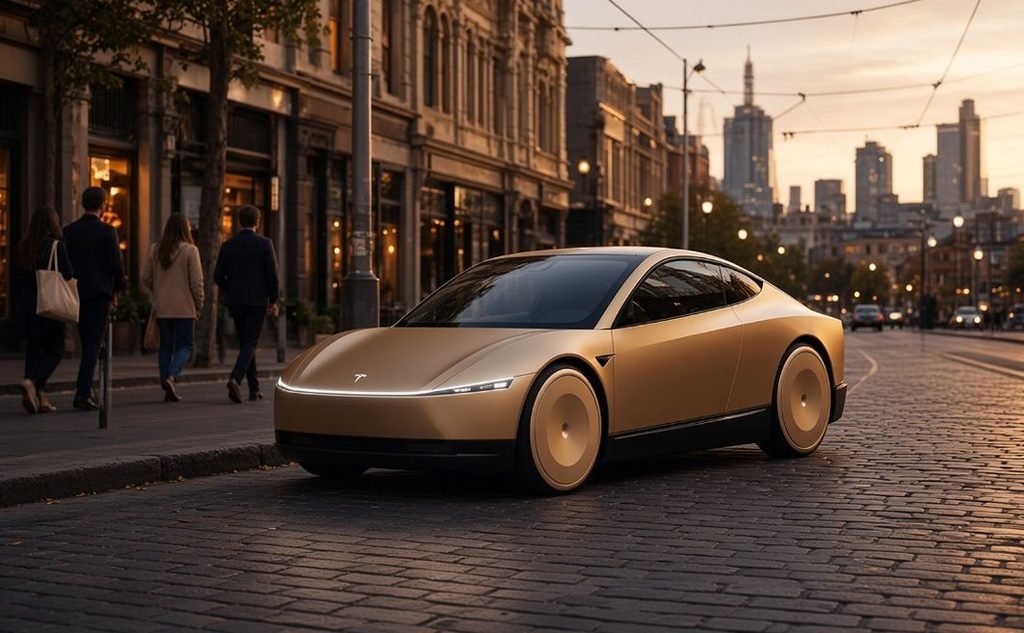
Tesla is careful to draw a line between what it sells today and what it wants permitted tomorrow. FSD (Supervised) launched in Australia in September 2025, making Australia the first right-hand-drive market to get it. The submission is explicit that it’s a Level 2 system.
“For the avoidance of doubt, Tesla’s Full Self Driving (Supervised) system complies with applicable state, territory and Commonwealth laws and regulations as an SAE Level 2 ADAS that requires drivers to maintain proper control of the vehicle at all times. Since launching in September 2025, Tesla vehicles have completed over 160 million kilometres on Australian and New Zealand roads with FSD (Supervised) activated.”
Tesla submission
It then puts some safety numbers on the table.
“Compared with Tesla vehicles without FSD (Supervised) engaged, drivers with it activated have experienced a 40% reduction in collisions and a 90% reduction in harsh braking incidents, as well as safer behaviour including a 86% reduction in harsh acceleration.”
Tesla submission
These are Tesla’s own figures. The submission doesn’t explain the methodology, the time period or whether they’re Australia-only or combined with New Zealand, so treat them as a claim rather than an independent finding. I’ve reviewed FSD (Supervised) in Australia, and it’s impressive, but a supervised system and a car with nobody responsible behind the wheel are very different regulatory problems.
Where the 2029 date came from
Tesla’s claim that the AVSL is expected in 2029 is the crux of its argument, so I went looking for where that date comes from. The short answer is I couldn’t find it in any published government document. What the public record does show is a target that has slipped repeatedly.
The national work started in 2016, when the National Transport Commission (NTC) identified more than 700 regulatory barriers to automated vehicles. In November 2017, transport ministers set an ambitious goal. The NTC’s October 2019 program approach records that ministers “endorsed a goal of an end-to-end regulatory system in place by 2020 to support the safe, commercial deployment of automated vehicles at all levels of automation”. The same document already warned that “the timing (2020) is likely to change”.
It did. The NTC’s summary of its earlier work shows ministers agreed in June 2020 to a national AVSL and a regulator, endorsed the framework’s principles in May 2021, and agreed in February 2022 that the AVSL should be a Commonwealth law. The NTC’s 2022 policy paper says “Ministers have agreed a roadmap to implement the framework by the end of 2026”, with a footnote noting ministers agreed in May 2021 to commencement in 2026.
By the time the 2024–27 National Connected and Automated Vehicle Action Plan was published, there was no firm date at all. It simply says “The timing of this work is subject to ITMM-agreed timeframes.” The Department of Infrastructure consulted on the AV safety reforms in 2024, with submissions closing on 11 June 2024.
The most recent decision I could find is the Infrastructure and Transport Ministers’ Meeting communique of 21 November 2025. Ministers agreed to “conditional deployment of automated vehicles in select locations from 2027 as a first step, with full national AV readiness as soon as practical thereafter, subject to each jurisdiction’s capabilities.” The 29 May 2026 communique has no AV item. A limited exposure draft of an Automated Vehicle Safety Bill 2026 has been shared with some industry groups, but it hasn’t been published.
So 2027 is already the official date for conditional deployment in select locations. What isn’t public is when the AVSL itself is expected to commence nationally. Tesla’s 2029 figure may come from its briefings with transport officials, but I couldn’t verify it against any published source. Tesla notes the framework was “first proposed by the National Transport Commission back in 2016” and says progress “remains fragmented and continues to face uncertain timelines”. On the evidence, that’s fair.
What other submissions said
The Committee had received 261 submissions when I checked, and I searched every one that could be opened for references to automated vehicles. Very few deal with road AVs, and none oppose Tesla’s push for 2027.
The Department of Infrastructure, Transport, Regional Development, Communications, Sport and the Arts (Submission 206) is neutral. It lists “automated vehicles” among new and emerging technologies identified as productivity opportunities in the National Freight and Supply Chain Strategy, but makes no ask on AVSL timing.
The Australian Automobile Association (Submission 41) focuses on access to vehicle data rather than autonomy. It wants the Consumer Data Right extended to vehicles and the Motor Vehicle Information Scheme updated, noting that “Calibration of system hardware, such as windscreen mounted cameras, requires a live data stream.” It says connected vehicles were about 25% of new sales in 2024, a share expected to reach 93% by 2031. It takes no position on when AVs should be allowed.
Professor Hugh Harley (Submission 137) raises autonomy only speculatively, noting “If driverless taxis turn out to be much cheaper than other taxis, then potentially the demand for taxi services will rise.” He makes no policy recommendation.
Major transport bodies including Austroads, ARTC, Roads Australia, the Australian Trucking Association, HVIA, NatRoad, the Australian Logistics Council, the ATSB and the Insurance Council of Australia made submissions that don’t mention automated vehicles at all. Car industry and motoring groups such as the FCAI and the state motoring clubs, and AV operators such as Waymo, aren’t among the submitters.
Why it matters
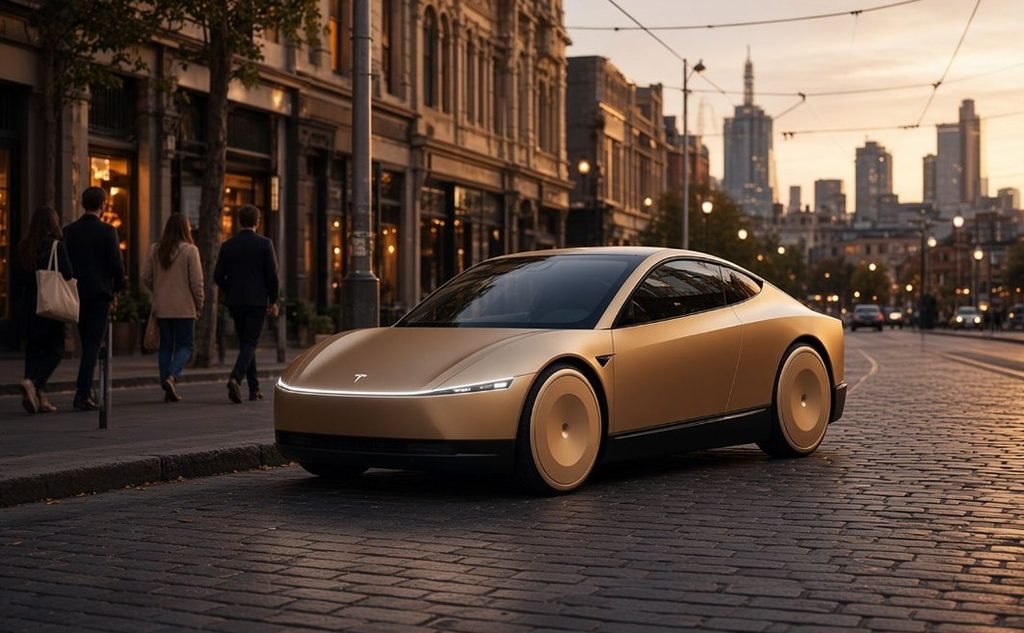
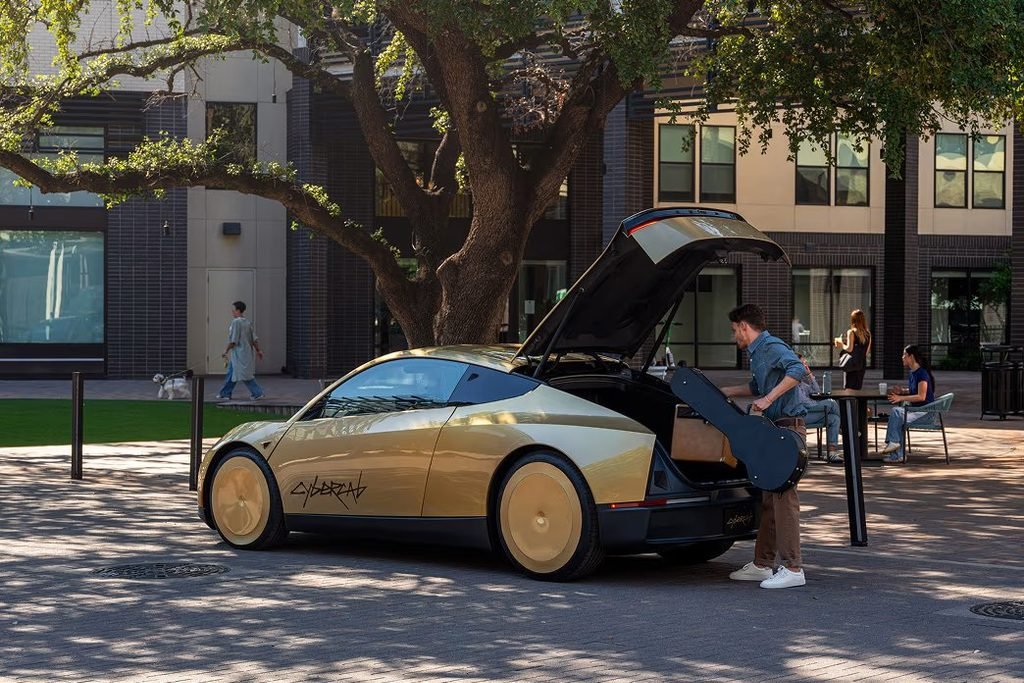
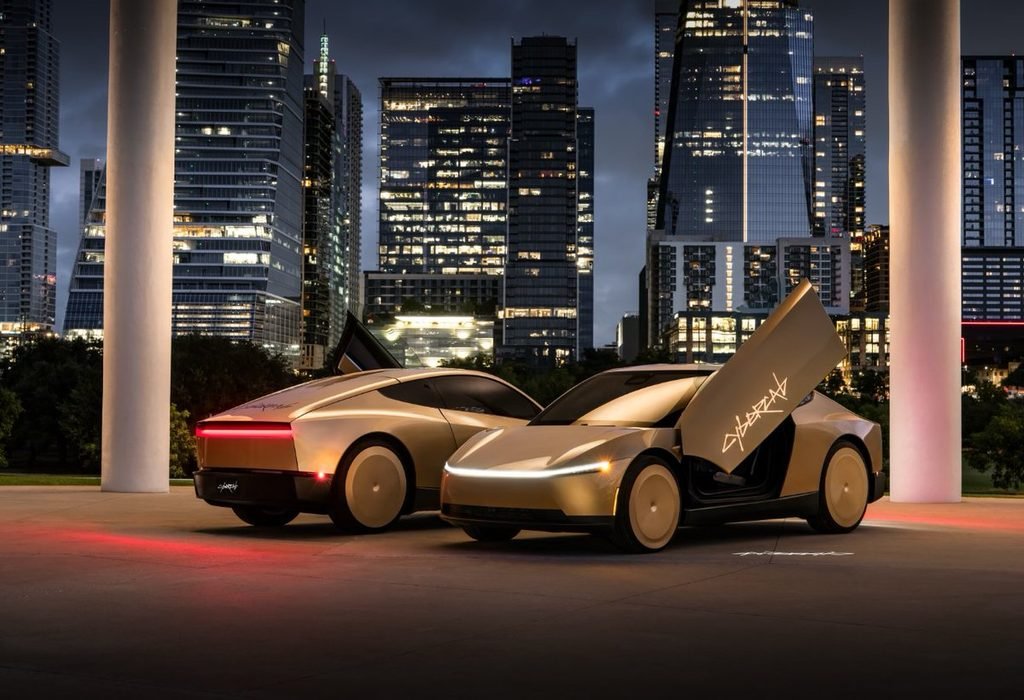
There’s a lot riding on this for Tesla. The company has launched a driverless Robotaxi service in Austin and is touring the Cybercab around Australia, but in Australia the Cybercab is only a display piece. It has no steering wheel or pedals, and our laws assume a human driver is responsible. Without the AVSL, there’s no legal path to running it as a commercial service.
Tesla isn’t the only company waiting. Waymo has been eyeing Australia too, and any operator wanting to run a driverless service here faces the same problem.
I’ve argued before that regulators are moving too slowly, and that the approval process for FSD has been unclear. The record backs Tesla’s frustration. The target was 2020, then 2026. Now it’s a conditional start in select locations from 2027, with no public date for full national readiness.
Tesla’s conclusion sums up its argument across the whole submission.
“Across these topics Tesla’s contention is consistent: productivity in transport and energy is being held back less by the absence of mature technologies than by policy settings that have been slow to accommodate and accelerate the economy-wide benefits of electrification.”
Tesla submission
It’s now up to the Committee to decide whether to add its voice. With no other submitter arguing against a faster timeline, the bigger obstacle may be getting nine governments to agree on one.
For more information, head to the Senate Select Committee on Productivity in Australia.
For more tech updates, stay tuned to our blog.