The Ocarina of Time remake on the Switch 2 smashes together the past and present. The game retains much of the original N64 experience while updating it with modern graphics and gameplay that make it feel contemporary. But the mingling of time periods also extends to the development team. While Ocarina’s remake was led by
The Ocarina of Time remake on the Switch 2 smashes together the past and present. The game retains much of the original N64 experience while updating it with modern graphics and gameplay that make it feel contemporary. But the mingling of time periods also extends to the development team. While Ocarina’s remake was led by producers Eiji Aonuma (a director on the original game who is now the franchise’s steward at Nintendo) and Hidemaro Fujibayashi (best known for directing Breath of the Wild and its sequel), the team also featured a number of younger developers, including some who had never played the original. According to Fujibayashi, those new voices provided some much-needed perspective that shaped the remake.
“What really impressed me was the fact that they really embraced the theme of what not to change from the original,” Fujibayashi tells me ahead of Ocarina of Time’s launch when explaining the influence of the younger team members, who approached the project “very carefully.” He adds that “I feel confident that they weren’t necessarily pursuing something new for the sake of novelty when it might be unneeded and clutter the experience. They’re looking for elegance. Only what is needed, only what was important in the original, and how to carry that forward as their focus. And I think that’s a perspective they’ll be able to bring to future projects as well.”
Much has changed since Ocarina of Time first debuted on the Nintendo 64 in 1998, and Aonuma has had the unique perspective of working on both iterations of the game. For him, the most obvious difference from then to now is the scope of the production. “We used to have maybe just one person designing the backgrounds, and that’s something that you couldn’t do nowadays,” he says. “A lot of the process is not so different compared to the N64 days, but the scale [is different]: There’s a lot more time involved, a lot more people involved, and because of that it can be harder to manage these teams.”
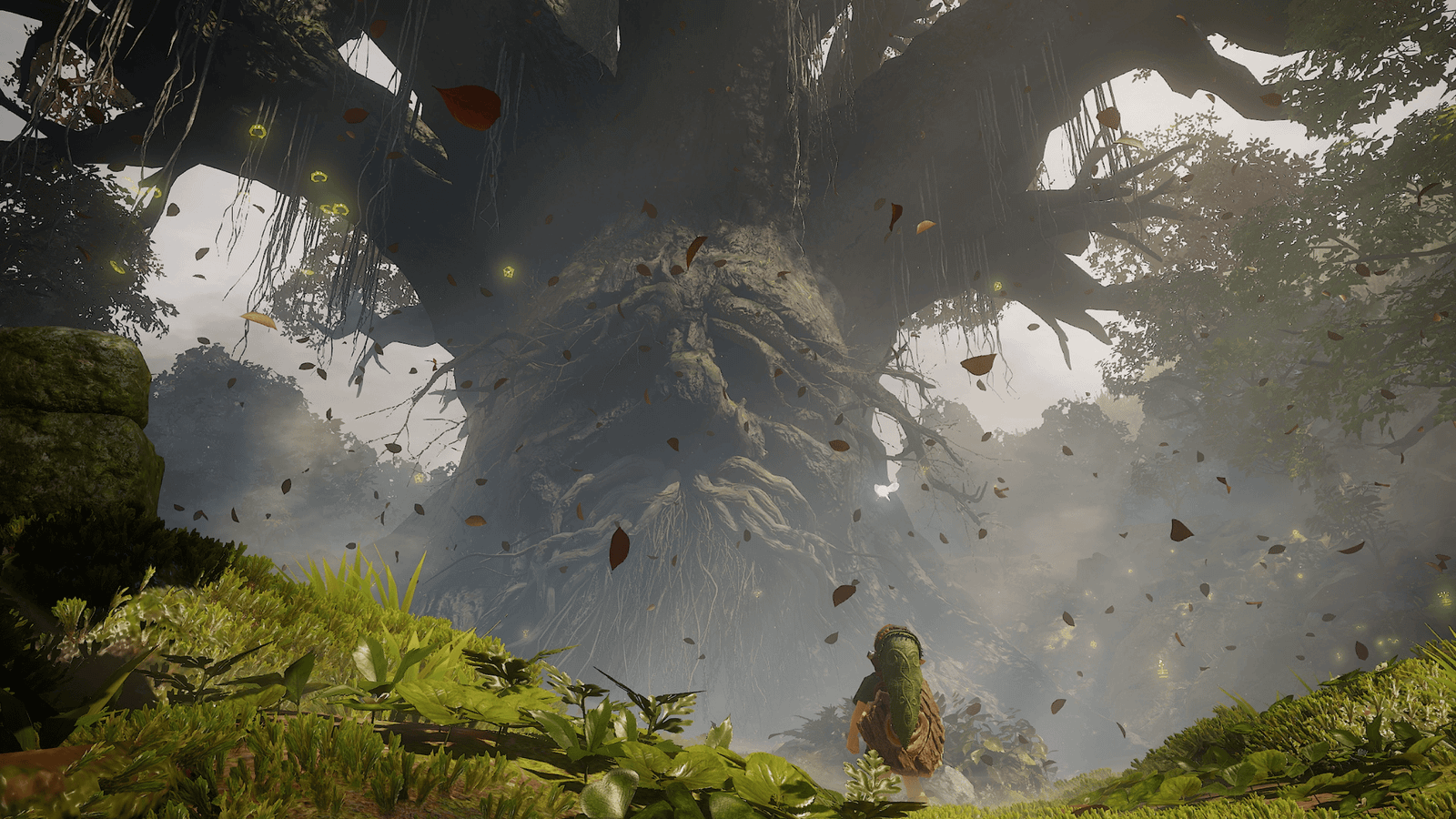
Image: Nintendo
What has also changed is the perspective of players. The original Ocarina of Time was Nintendo’s first stab at bringing The Legend of Zelda into three dimensions, and there are elements that can feel dated today; you can’t control the camera, for instance, or jump whenever you want. This feeling is only exacerbated by the fact that the most recent Zelda games have put a strong emphasis on player freedom. After building your own flying machine in Tears of the Kingdom, going back to the original Ocarina can feel restrictive. The team made a handful of changes, like giving players complete camera control and the ability to jump anywhere, which were designed to provide connective tissue between the remake and its present-day contemporaries.

“When you’re developing a game like this with the free jump, we have to adjust the world to compensate for that freedom of the player,” Aonuma says. “I wasn’t quite sure about doing this in this title, but as soon as I felt it I thought, ‘Okay, this is a really good way to give players another way to approach a goal in the game.’ It adds just a little bit more freedom compared to the original Ocarina of Time. For me, bringing forward a little more freedom in this title is helpful because it carries something forward from Breath of the Wild and Tears of the Kingdom. Having that connection to the recent titles I think was really helpful.”
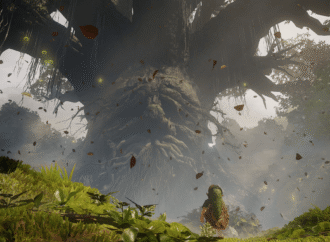
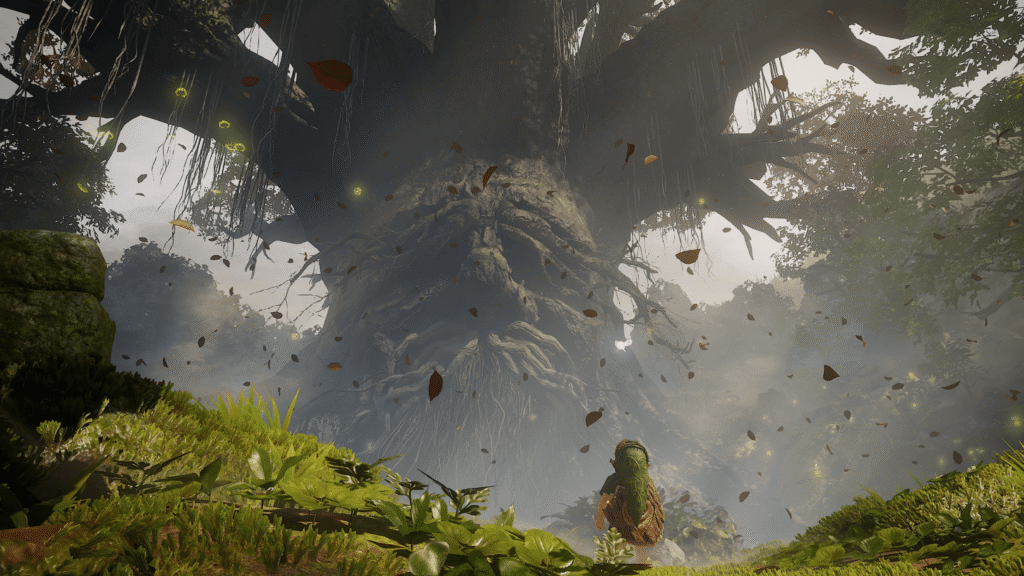
The same could be said for the game’s overhauled graphics, which blend realism and fantasy art into a visual style that feels distinct from other Zelda adventures. Aonuma says the goal was to “bring out details of the world that people weren’t able to see in the original Ocarina of Time.” He adds that this was “something that we wanted to do in the original, but we didn’t have the technical compatibility at the time in terms of hardware output.”
That said, the core gameplay of Ocarina still holds up remarkably well, particularly compared to other early 3D games. Fujibayashi was working at Capcom when the original launched in 1998, but he distinctly remembers anticipating how Nintendo would approach solving many of the problems that plagued early attempts at big 3D worlds. One of the most impactful features in Ocarina is something called Z-targeting, which lets the player lock on to an enemy, making combat much more intuitive. “The solutions are something that still stick with me as a foundation for when I create 3D games,” Fujibayashi says.
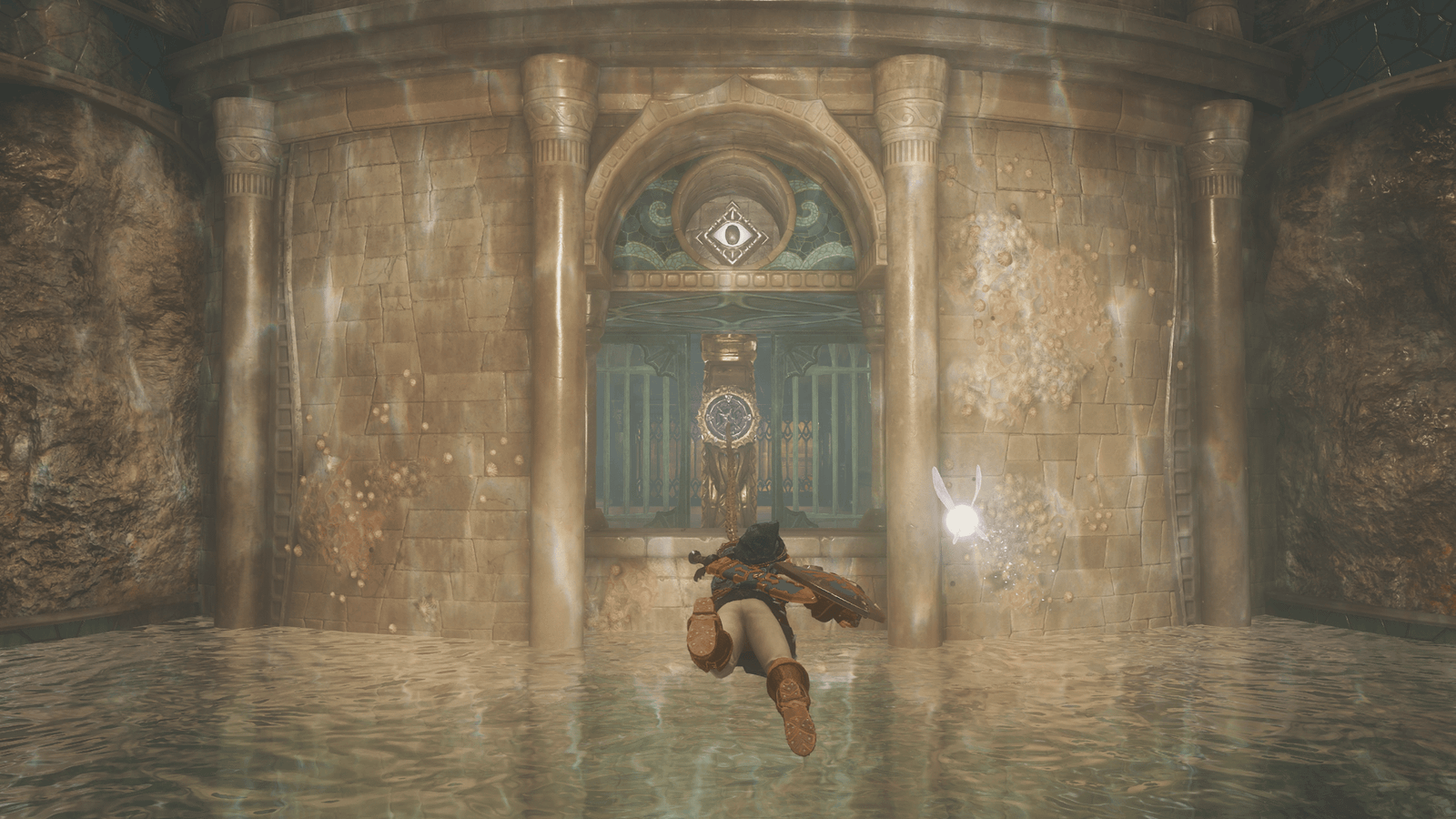
Image: Nintendo
For Aonuma, remaking Ocarina of Time was also an opportunity to address some issues he had with the original version of the game. For instance, one of the most infamous parts of the N64 Ocarina was Navi, a little fairy who serves as a guide for Link during his adventures. The problem was, in the process of trying to help the player, she could become overbearing and, in turn, something of a nuisance. While Navi is still ever-present in the remake, her chatter has been toned down quite a bit.
“One of the things that we were thinking about in [the N64] development process is: How do we lead the player to the end of this adventure?” Aonuma recalls. “Can they follow along with the story? Something that we used was the Navi hints, and some of these were added just because we felt in that moment a palpable need for the player to have a little extra information. But it’s something that’s a hard balance to hit. You don’t want to give an answer outright to a player, you want a little bit of an information gap so that they have an opportunity to think for themselves and make that stretch. The more hints you add, the more Navi would talk, and that would change the player experience. [In the remake] we were looking for ways to make all of that more comfortable and more streamlined. And so using in-game text to chronicle your adventures up to that point, so people could remind themselves what they’ve done on the quest so far, helps us get people to the end goal.”

But perhaps the biggest thing to address was the Water Temple, widely regarded as the most challenging dungeon in the original game. Even Fujibayashi tells me that he remembers it being “quite difficult” when he first played it. On the N64, players had to contend with an awkward camera and were forced to constantly open up a menu to use important items. But much of that has been modernized in the remake, making the dungeon less arduous, as players can now better see and navigate the underwater dungeon. “I think when people make comparisons from their memory now to the original version of the Water Temple they’re going to feel quite a difference,” Aonuma explains after I tell him I found the new version of the dungeon much easier. “So this is really nice to hear. As soon as you said that I thought, ‘We did it.’”
Aonuma also felt it was important to keep Ocarina’s more traditional style of Zelda gameplay alive as the franchise celebrates its 40th anniversary this year. Breath of the Wild showed what could happen when you turned Hyrule into a true open world, Echoes of Wisdom took classic top-down gameplay and mixed it with an inventive new style of puzzle, and Ocarina offers something more straightforward. He believes that having all of those very different iterations on Zelda is part of the reason the franchise has had such staying power. “You need different approaches,” he says. And it’s those new developers, many of whom are fresh to Zelda, that he hopes will keep that philosophy going.
“We’ve had opportunities to add to the playbook of Zelda, if you will, and the language of development,” he explains. “You get to see the progression of these ideas across the franchise. And now, working with younger staff on this remake, we’re having the opportunity to bring in additional new ideas. I really look forward to the future and what’s possible coming from the new staff.”
Keep following us for the latest insights.