Google has released its latest version of their Google Home Speaker. While the space was previously occupied by ageing options like the Nest Audio and Nest Mini, this new generation device focuses heavily on local processing power and deeply integrated Gemini powered voice control, with Google Assistant a distant memory. The purpose of this speaker
Google has released its latest version of their Google Home Speaker. While the space was previously occupied by ageing options like the Nest Audio and Nest Mini, this new generation device focuses heavily on local processing power and deeply integrated Gemini powered voice control, with Google Assistant a distant memory.
The purpose of this speaker is to let you talk to it in a natural voice, which makes interactions much easier than previous speakers. With Gemini on my phone, I always found it jarring to go back to interacting with last generation voice models. Thankfully this speaker resolves that and is a great option for the kitchen bench, or bedside table. Just ask for information, manage daily routines, control your smart appliances, and handling your entertainment becomes super simple.
While anyone could technically buy the speaker, the target audience will certainly align best with those already aligned with the Google and Android ecosystems. This spans those smart home enthusiasts looking for robust hardware hubs, busy families needing an organised digital assistant, and general consumers wanting an audio upgrade.
Let’s dive into the full review.
Design
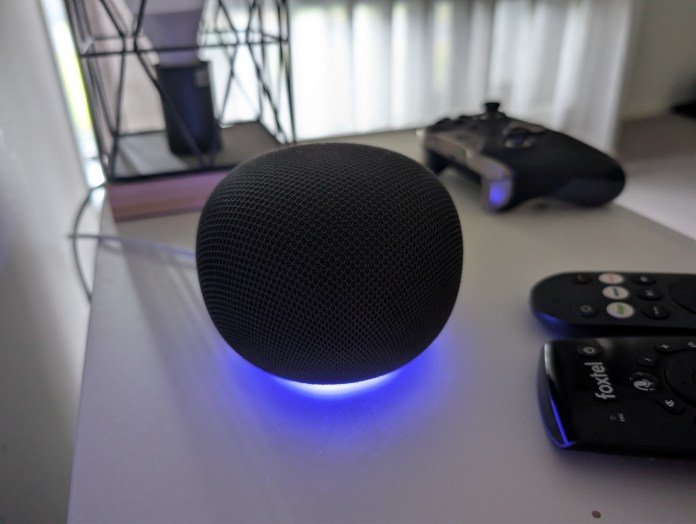
The physical form factor marks a distinct departure from the upright design of previous models, opting instead for a compact, rounded aesthetic. Measuring 86.6 mm in height and 107 mm in diameter, the device has a small footprint, sitting unobtrusively on flat surfaces while weighing a solid 396 grams, but also super portable.
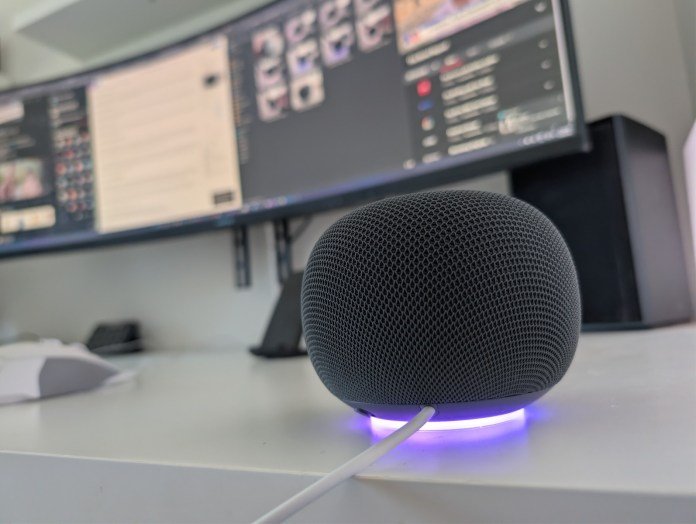
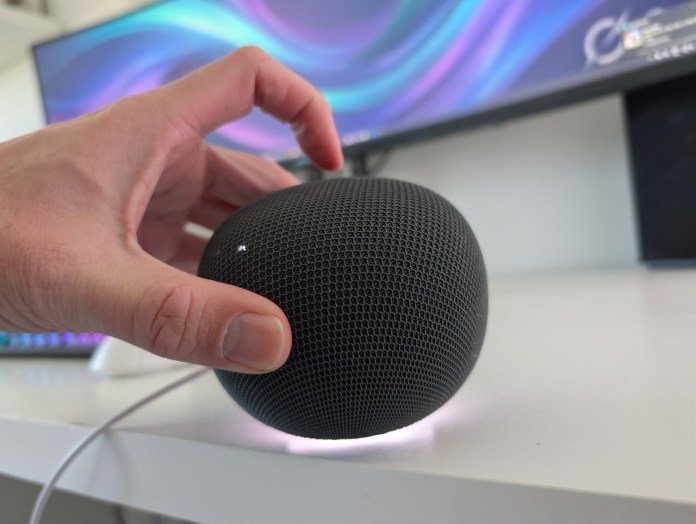
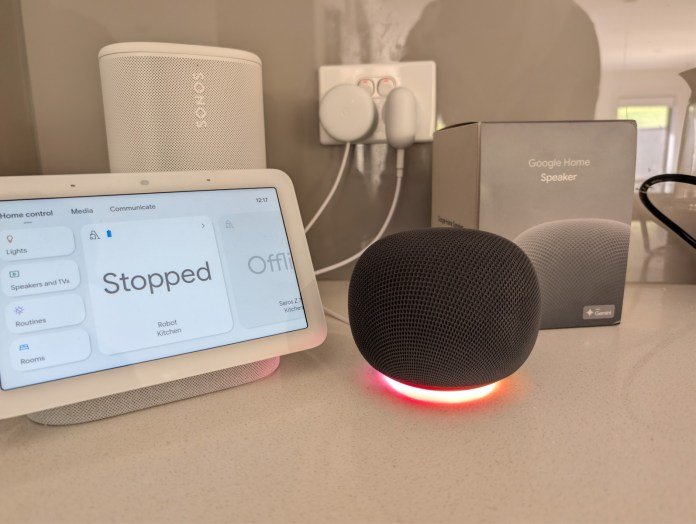
One of the most distinct design choices is to wrap it in a textured fabric, with no obvious buttons on the exterior. This feels like Googe are trying to make this feel more like furniture and less like a technology device. While I like the execution, I do wish there was some visual indication or texture difference to indicate which was the increase/decrease volume buttons.
The speaker is available in a choice of two colour choices, Porcelain and Hazel (reviewed and would better be described as charcoal), with the idea that it could blend naturally into contemporary Australian home decors. Personally I like the contrast of the dark fabric against a light benchtop, or bedside, while those looking to minimise the device’s appearance, would naturally select the lighter option.
When compared to competitors like the Apple HomePod Mini or the Amazon Echo, the design language feels incredibly organic and tactile.
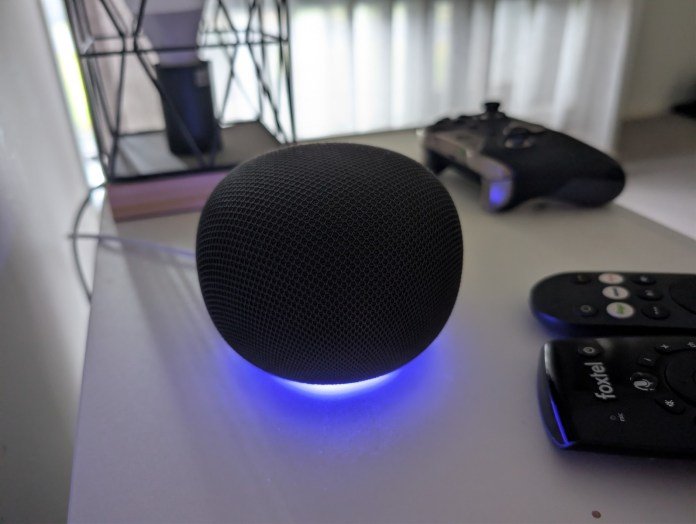
Google intentionally placed a dynamic multi-coloured underglow light beneath the base of the speaker. I really enjoy the resolution on this RGB ring, it’s fun, colourful and almost feels alive. This glowing ring pulses smoothly to let you know when the device is listening, thinking, or responding, keeping the top surface clean and minimalist.
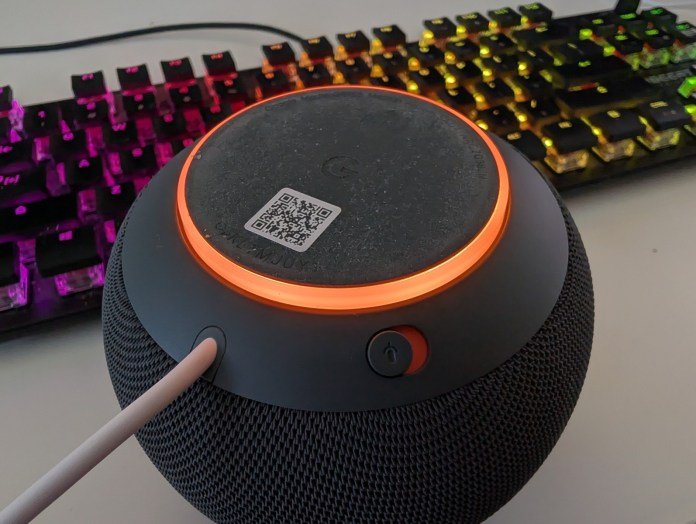
For privacy advocates, the inclusion of a physical two-stage microphone mute switch is a welcome addition. The only minor design downside is that this toggle switch is located on the very bottom of the unit, meaning you have to physically lift the speaker to mute it, which feels slightly clumsy compared to a rear or top button. When you enable it, the internal voice calls out that it’s on mute, and the light ring turns orange.
Performance
As good as the speaker looks, it’s how it sounds that will be a key decision maker for many potential customers. The speaker leverages an omni-directional 58 mm full-range driver that distributes uniform 360-degree sound across the room. The speaker delivers good audio quality, which is an upgrade over the first-generation Nest Mini, however it’s efficient size means there’s physical constraints to how much it can offer.
The sound difference between this and the Sonos Play is substantial, in terms of volume, bass and well general audio quality, although that device is twice the price, so keep that in mind. The speaker works best for songs and podcasts, with clear vocals and punchy low frequencies that prevent the audio from sounding thin or muddy at higher volumes.
For what it is, a small, connected, AI-enabled speaker, it does a great job, however I do wish I could throw a couple of batteries in it, disconnect the power cable and make it a portable speaker.
In terms of processing and voice pickup, the hardware is remarkably snappy due to its quad-core A55 2.0 GHz processor and dedicated neural processing unit. Combined with three far-field microphones, the speaker rarely misses a command, even when music is playing loudly or household background noise is present. The integrated voice match technology works seamlessly, quickly identifying which family member is speaking to deliver personalised calendar and reminder updates.
My biggest issue wasn’t being heard, but being heard by multiple devices around my home. While this is not an issue everyone will face, Google Home technology is designed to overcome this, detecting the device which registers the highest volume to identify which device is closest to you and the logical choice to respond from. On more than one occasion I would have my phone and the speaker respond, or this and the Nest Display respond when I called “Hey Google”.
The setup and wireless connectivity is done well, utilising modern Wi-Fi 6 and Bluetooth 5.4 protocols to ensure stable streaming performance. The device also functions natively as a Matter hub and includes a Thread border router, which drastically minimises response latency when triggering local smart home actions. Turning off compatible lights at the end of the day happens almost instantly, bypassing the usual cloud delays.
Features
The product introduces an array of advanced smart features that move well beyond simple timers and basic web searches, making home automation feel genuinely intelligent.
Gemini for home
This advanced voice assistant layer acts as the primary intelligence engine, providing richer answers, better contextual memory, and more natural interactions across your entire household.
Gemini live conversation
This capability allows users to hold fluid, back-and-forth verbal discussions where you can interrupt the assistant, ask follow-up questions, or change topics mid-thought without repeating the trigger phrase.
Immersive home theatre
Users can pair two identical units together alongside a Google TV Streamer to output spatial surround-sound audio, instantly upgrading a standard living room television setup.
Sustainable construction
The hardware is built with at least 37% recycled plastics, metals, and rare earth elements by weight, packaged inside retail boxes that are entirely plastic free.
Issues and opportunities
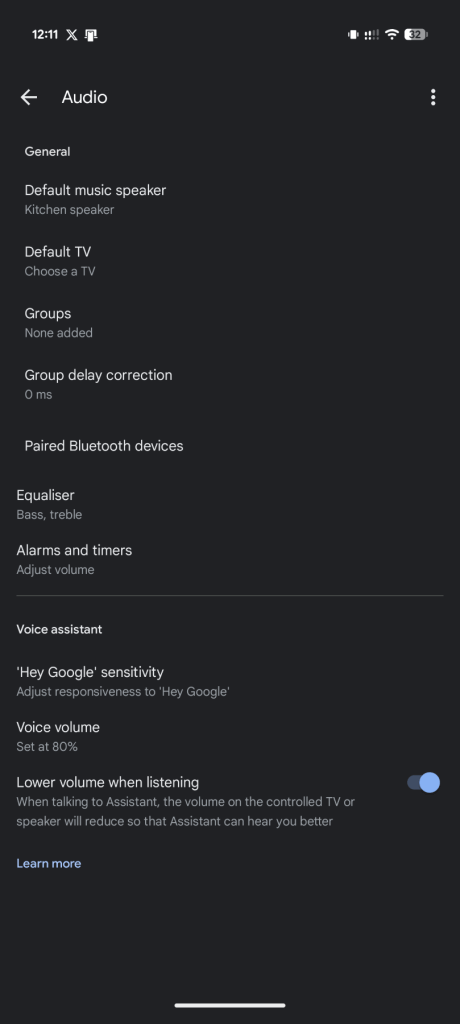
While the technical capabilities are impressive, the heavy reliance on a premium subscription model presents a clear hurdle for standard buyers. Standout capabilities like fluid conversational brainstorming and advanced camera history summaries like “What happened to the vase in the living room?”, requires an ongoing Google Home Premium subscription. While Google bundled a generous six-month trial with early purchases, the recurring monthly cost of A$15 after the trial ends might frustrate users who expect all features to be included out of the box.
From a hardware standpoint, the choice to use a captive 1.5 metre power cable connected directly to the speaker limits repair options. If a pet chews the cord or the cable breaks during a house move, consumers must replace the entire unit rather than just swapping out a broken lead.

Price and availability
The Google Home Speaker is priced at A$199 for the Australian market, positioning it competitively within the mid-range smart audio segment. Local retail versions include the standard captive power cable and a 30W USB-C power adapter inside the box. While global regions received alternative shades like Jade and Berry, local buyers are limited to the core Porcelain and Hazel options.
Purchases made before the end of September include the complimentary six-month premium service trial, which must be redeemed through the setup application. If you’re looking to buy, you can find it at:
- Google Store Australia offers the speaker for A$199 at store.google.com/au.
- JB Hi-Fi stocks both colour variants for A$199 on their online storefront at jbhifi.com.au
Overall
The Google Home Speaker stands out as a highly successful evolutionary step for ambient home technology, effectively bridging the gap between traditional smart speakers and modern generative AI (Gemini). The combination of an omni-directional driver layout and a dedicated neural processor ensures that the device succeeds as both an entertainment speaker and a fast home automation hub.
This speaker will appeal most to consumers who are already comfortably entrenched in the Google ecosystem or those looking to replace underpowered smart speakers with a high-performing alternative. It is an excellent choice for individuals who want a household companion capable of answering intricate questions, mapping out itineraries, or managing complex smart home routines without breaking a sweat.
At less than A$200, the product delivers great value for money and even if you choose not to continue the paid subscription after the trial expires, the core hardware upgrades and baseline assistant features remain incredibly robust.
Check back often for more exciting news!