South Korea’s stock market is bearing the brunt of a global AI selloff as investors question whether massive spending on the technology will pay off and worry that persistently high interest rates will make the boom more expensive to sustain. On Thursday, the benchmark Kospi index plunged 8%, while Samsung Electronics and memory-chip rival SK
South Korea’s stock market is bearing the brunt of a global AI selloff as investors question whether massive spending on the technology will pay off and worry that persistently high interest rates will make the boom more expensive to sustain.
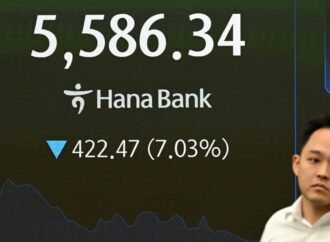
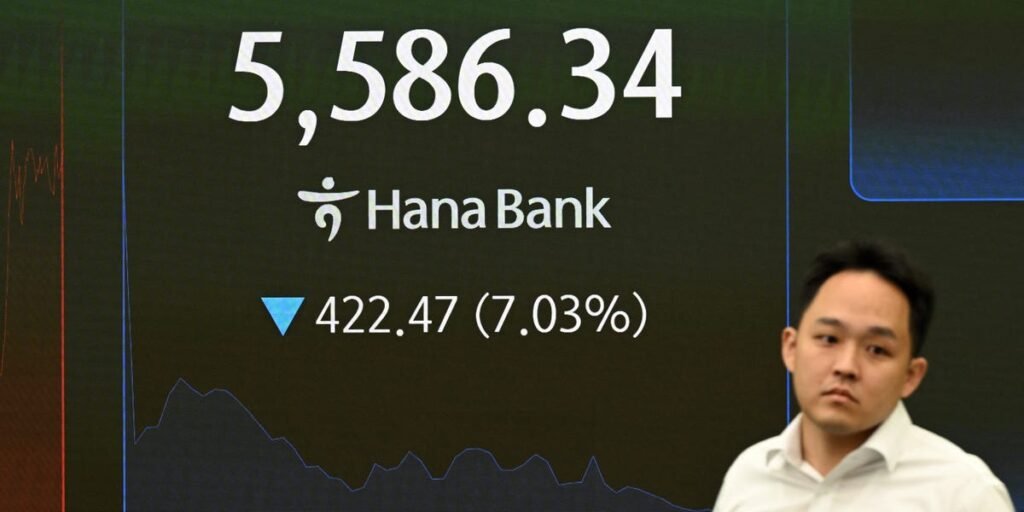
On Thursday, the benchmark Kospi index plunged 8%, while Samsung Electronics and memory-chip rival SK Hynix sank 11% and 12%, respectively. The selloff triggered a trading halt early in the session.
The plunge followed a tech-led selloff on Wall Street on Wednesday after hotter-than-expected US inflation data revived concerns about higher interest rates.
But South Korea’s troubles go beyond interest rates.
Investors are increasingly questioning how much they should pay for semiconductor stocks, even as the companies’ earnings outlook remains relatively strong.
Doubts about the profitability of leading AI companies and their growing reliance on external financing were prompting investors to rethink how they valued chipmakers, wrote Mingyu Kim, an analyst at KB Securities, wrote on Wednesday.
“Concerns over the sustainability of AI investment beyond the next 12 months have prompted the market to revert to valuing semiconductor stocks as commodity-driven cyclicals,” Kim wrote.
Even blockbuster earnings have failed to reassure investors. ‘
Last Thursday, Samsung Electronics forecast a nearly ninefold increase in third-quarter operating profit, but its shares have since lost nearly a fifth of their value.
Competition is another concern. Chinese chipmaker CXMT plans to unveil a new server-memory product by year-end, raising fears that greater supply could pressure chip prices.
Meanwhile, foreign investors sold more than 12 trillion won of South Korean stocks on a net basis in October, according to KB Securities. Buybacks by Samsung and SK Hynix, which had helped support the market since August, are also winding down, leaving fewer buyers to cushion the decline.
The latest selloff adds to a year of extraordinary swings in South Korean stocks.
The Kospi more than doubled in the first half before plunging 22% in July, its worst month since the 2008 global financial crisis.
The index had fallen about 35% since the end of June, going from the world’s best-performing major market in the first half to its worst performer in the second.
Still, KB Securities sees a potential buying opportunity as the market searches for a bottom.
“We believe the market is currently searching for the second bottom of a W-shaped recovery,” Kim wrote.
Check back often for more exciting news!