Artificial intelligence has become such a powerful force in financial markets that semiconductor stocks are now doing more to explain movements across asset classes than oil prices, according to Goldman Sachs. “Tech has become an increasingly important driver of risk appetite,” Goldman analysts wrote in a note published on Monday. The bank found that exposure
This story is based on an interview with Leslie Hodgin, a 55-year-old marketing consultant who moved from the US to the Netherlands with her husband, John Lyman, 52. It has been edited for length and clarity. Until 2026, I was living in Richmond, Virginia, with my husband and our cat. My dad was in the
South Korea’s AI trade roared back Wednesday, as stocks staged a dramatic rebound from Tuesday’s rout and a disastrous AI IPO reversed course. The benchmark Kospi index surged as much as 5%, triggering a temporary curb on program buying as investors piled back into heavyweight chipmakers. Samsung Electronics and SK Hynix jumped as much as
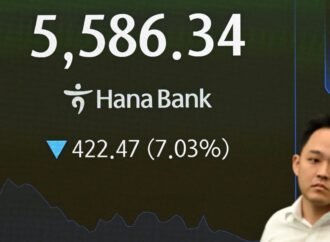
South Korea’s stock market is bearing the brunt of a global AI selloff as investors question whether massive spending on the technology will pay off and worry that persistently high interest rates will make the boom more expensive to sustain. On Thursday, the benchmark Kospi index plunged 8%, while Samsung Electronics and memory-chip rival SK
South Korea is one of the biggest winners of the AI boom. It’s home to Samsung Electronics and SK Hynix, the two largest manufacturers of memory chips. Chip workers are flashing bonuses of around $400,000. The KOSPI, Korea’s benchmark index, is up almost 60% for the year so far. Yet a report from Goldman Sachs
Korean fried chicken with the chairmen of SK Group and LG. Yellowtail sashimi at Nobu with Larry Ellison and Elon Musk. Mapo tofu and whiskey with TSMC founder Morris Chang. People are so curious about where Nvidia CEO Jensen Huang eats, there’s a blog that tracks his sumptuous dinners out around the world. But the