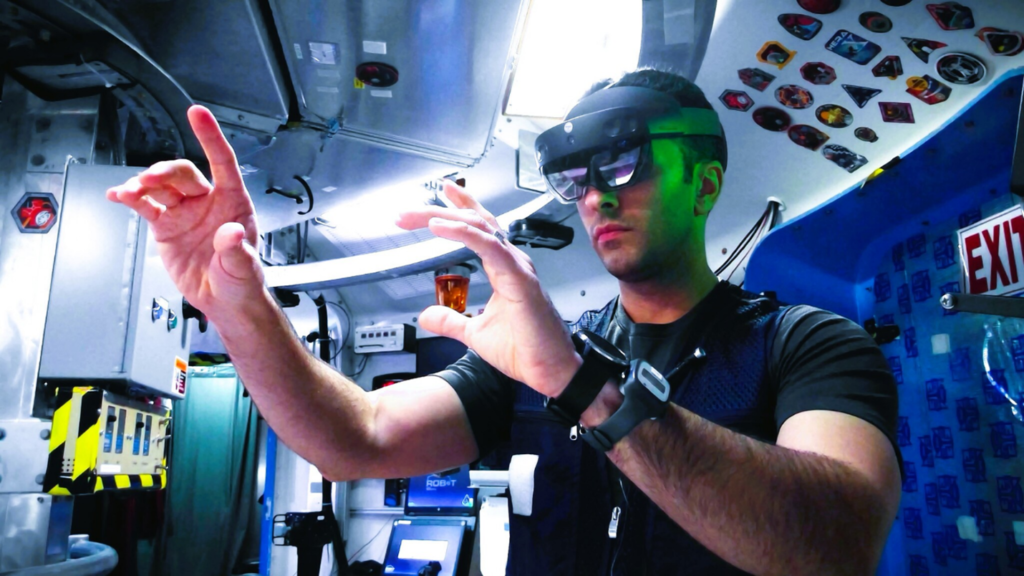
NASA is recruiting research participants for the agency’s next simulated deep space mission. Starting in August 2027, research volunteers will spend a year living and working in interplanetary environments at the agency’s Johnson Space Center in Houston, operating in the isolated conditions expected during crewed missions to the Moon or the Red Planet.Learning from this
NASA is recruiting research participants for the agency’s next simulated deep space mission. Starting in August 2027, research volunteers will spend a year living and working in interplanetary environments at the agency’s Johnson Space Center in Houston, operating in the isolated conditions expected during crewed missions to the Moon or the Red Planet.
Learning from this new year-long experience, called Moon and Mars Analog Exploration, can be used to help keep astronauts safe and mission-ready during future operations on the planetary surface. The results could also inform plans for a sustained lunar presence through the agency’s Lunar Base and future Artemis missions.
NASA is seeking candidates for the approximately year-long simulation mission, which will take place in two confined habitats. In addition to specific physical and educational requirements, volunteers must be willing to participate in a multi-day selection process and pass NASA physical and psychological assessments, found on the Moon and Mars Exploration Analog website. Candidates should also have a strong desire for unique and rewarding experiences and an interest in contributing to NASA’s work to prepare for extended stays on the lunar surface and the first manned mission to Mars.
The Moon and Mars Exploration Analogue evolves elements of the agency’s HERA (Human Exploration Research Analogue) and CHAPEA (Crew Health and Performance Exploration Analogue) missions into a single, integrated mission to streamline the way researchers assess astronaut adaptation across the full range of possible mission scenarios. Using the HERA habitat as a spacecraft and the CHAPEA habitat as a base, volunteers will live and work in confined, isolated environments that simulate months-long flights to and from other planetary surfaces. They will also mimic surface operations, including mock Mars walks and using a rover to travel to exploration sites located beyond the main habitat.
Throughout the analog Moon and Mars exploration mission, researchers will study the health and performance of the crew under the resource constraints and demands of the mission. These missions also help NASA evaluate and validate hardware, technologies, protocols, requirements and other systems designed to support crew health and performance on long-duration deep space missions, all without leaving Earth. The effort will provide valuable data for NASA’s Human Research Program, which innovates ways to keep astronauts healthy and mission-ready.
To apply, visit:
NASA Analog Recruitment
As part of the Golden Age of innovation and exploration, NASA will send astronauts on increasingly difficult missions to explore more of the Moon in search of scientific discoveries, economic benefits, establishing a lasting human presence on the lunar surface and building the foundation for the first manned missions to Mars.
For more information about NASA’s Human Research Program, visit:
https://www.nasa.gov/hrp/
Check back often for more exciting news!