As NASA returns humans to the lunar surface and establishes a long-term presence on our closest celestial neighbor, the agency and commercial human landing system providers Blue Origin and SpaceX have streamlined the designs and changed both concepts of operations for its future crewed landers. Since NASA established initial contracts with Blue Origin and SpaceX
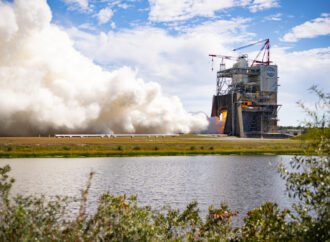
NASA tested RS-25 engine No. 10001 on Oct. 21 on the Fred Haise Test Stand at NASA’s Stennis Space Center near Bay St. Louis, Mississippi. Test teams fired the developmental engine for almost eight-and-a-half minutes (500 seconds), the same amount of time RS-25 engines fire during launch of NASA’s SLS (Space Launch System) rocket. During
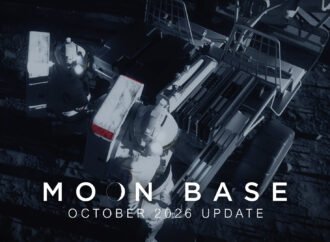
As NASA works to build the Moon Base, crewed and robotic lunar rovers will play a crucial role during early development through technology demonstrations, astronaut transport, terrain mapping, scientific investigations, and resource prospecting. Data from these early missions will inform future mobility systems and infrastructure needed for astronauts to live and work on the Moon.
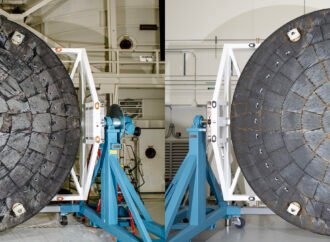
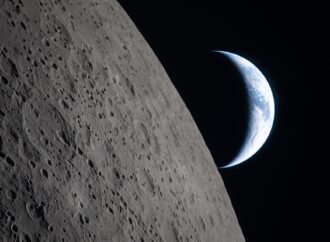
NASA’s Artemis II mission sent four astronauts around the Moon and brought them safely back to Earth, laying a foundation for crewed flights to the Moon’s surface. Additional engineering data analysis of the Orion spacecraft’s heat shield confirmed initial data showing the heat shield performed as expected. In particular, NASA measured whether the thermal protection
NASA will provide an update on its plans to return American astronauts to the surface of the Moon by 2028 at 2 p.m. EDT, Friday, Oct. 23, at the agency’s Kennedy Space Center in Florida. Learn where to watch online: NASA Live Participants in the briefing include: NASA Administrator Jared Isaacman NASA Associate Administrator Amit
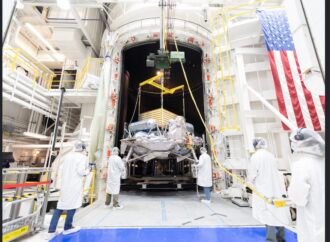
A commercial lander that will be at the forefront of NASA’s efforts to establish a Moon Base, humanity’s first lunar outpost, has passed a series of critical tests at the agency’s Jet Propulsion Laboratory in Southern California. The tests simulated the extreme temperatures and vacuum of space, as well as the intense shaking and ear-splitting