
If you ask tech workers what people don’t understand about working in their industry, they’ll tell you: a lot of things. In interviews with Business Insider, tech professionals at companies like Amazon, Google, and Snap challenged assumptions that their jobs consist primarily of coding, that AI has made their jobs easier, and that Big Tech
If you ask tech workers what people don’t understand about working in their industry, they’ll tell you: a lot of things.
In interviews with Business Insider, tech professionals at companies like Amazon, Google, and Snap challenged assumptions that their jobs consist primarily of coding, that AI has made their jobs easier, and that Big Tech is the only worthwhile career path. Some focused on misconceptions from people outside the industry, while others pointed out misunderstandings from people already working in technology.
These professionals, including engineers, data scientists, and product managers, work in an industry that is rapidly changing. They say many people’s understanding of tech jobs hasn’t kept up.
Here’s what six tech workers believe are the biggest misconceptions about working in tech. (Their responses have been edited for length and clarity.)
My job is much more than coding

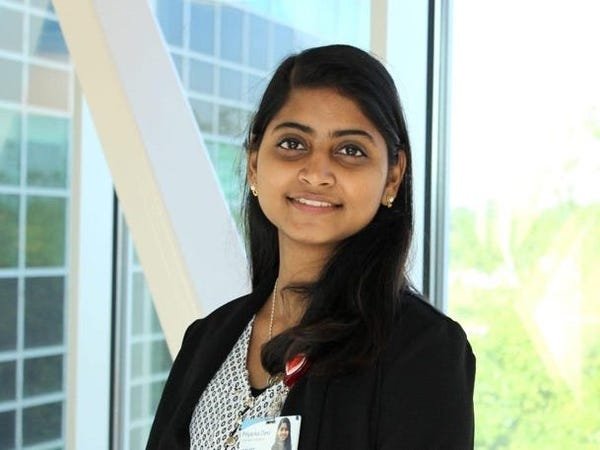
Priyanka Devi Ramesh says working in technology involves a lot more than writing code. Priyanka Devi Ramesh
Priyanka Devi Ramesh is a business intelligence engineer at Amazon. He is 30 years old and lives in Virginia.
One of the biggest misconceptions is that working in technology is all about coding. People assume that if you work in tech, you sit in front of a screen writing code all day. But my role as a business intelligence engineer is deeply rooted in understanding the business, talking to stakeholders, cleaning up messy data, and telling stories through dashboards.
A big part of my job is communication: translating complex data into something a non-technical customer or supplier can act on. Technology is much more multifunctional and people-oriented than most outsiders realize.
The advantages are real. So is the pressure.

Sreeja Apparaju says working in technology is more demanding than many people realize. Sreeja Apparaju
Sreeja Apparaju is a machine learning engineer at Snap. He is in his twenties and lives in New York.
One misconception is that tech jobs consist of hoodies, ping pong tables, and a four-hour work day. The advantages are real, but they exist alongside the genuine intensity of on-call rotations, pitching crises, performance reviews, and the constant pressure to keep learning as the stack evolves under your watch.
There is also an assumption that the work is purely solitary and tied to a screen. The technical problems are only half of it; the other half is people: understanding what users really need, negotiating priorities with partners, and communicating clearly enough that the right decisions are made even when you’re not there.
AI can’t think for you

Udit Mehrotra says AI cannot replace critical thinking. Udit Mehrotra
Udit Mehrotra is a product manager at Amazon. He is about 30 years old and lives in Seattle.
The biggest misconception I run into now is that you can outsource your thinking to AI. Many people have found that AI tools are really impressive at producing results quickly, and the temptation is to let the tools work.
The problem is that the quality of what comes out is determined almost entirely by the quality of thought you put into it. Garbage in, garbage out, except now it’s faster and looks more polished.
The bar keeps rising

Mike Kostersitz says AI hasn’t made his job easier. Mike Kostersitz
Mike Kostersitz is senior director of product management at Nike. He is 60 years old and lives in Oregon.
A common misconception is that tech workers are going along for the ride, making a lot of money with very little work because AI does the rest. That puts it backwards. AI doesn’t give you free time; eliminates repetitive work that used to crowd out important work.
The job hasn’t gotten easier: the bar has gotten higher. We are expected to think more clearly, decide faster, and lead more changes in a quarter than we used to do in a year.
Read more about people who found themselves at a corporate crossroads
Technology is much bigger than software engineering

Prerit Pathak says working in technology is much more than software engineering. Prerit Pathak
Prerit Pathak is a security engineer at Google. He is in his twenties and lives in New York City.
I think a lot of people mistakenly believe that being a “tech employee” is synonymous with being a software engineer. The reality is that technology is a vast ecosystem of functions like product management, UI/UX design, data science, and cybersecurity.
These specialists act as architects, maintainers and protectors of the digital world, ensuring that technical tools solve important problems for our future generations.
Big tech is not the only way

Iren Azra Zou says big tech isn’t the only rewarding career path. Rachel Wisnewski for BI
Iren Azra Zou is a software engineer at trucking logistics startup Double Nickel. He is in his twenties and lives in New Jersey.
I think some people in tech focus too much on working at the most famous tech companies. These can be great, but they are not the only way and are often not the best fit for everyone.
There are countless small and medium-sized businesses doing interesting and meaningful work. I see that a lot of people limit themselves because they think it’s “Big Tech” or something boring and non-technical. That’s just not what the industry really looks like.
Do you have a story to share about how you are going through a professional crossroads? If so, please contact the journalist by email at jzinkula@businessinsider.comor via Signal at jzinkula.29.