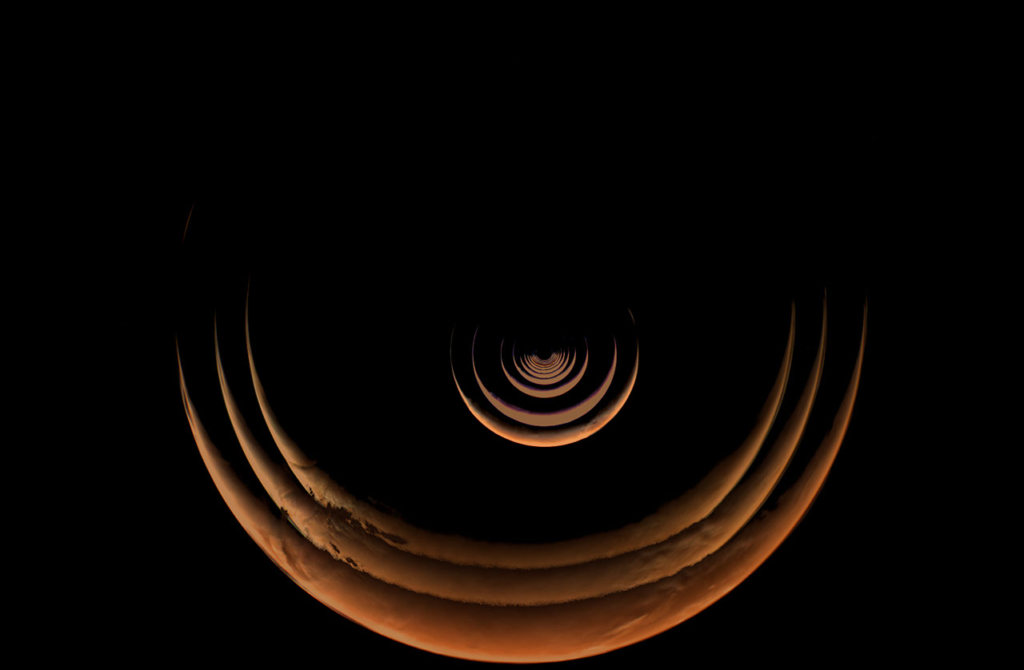
Explanation: Solar System bodies make deep space exploration more fuel efficient! Today’s video shows the Psyche spacecraft gaining speed and changing its trajectory with minimal fuel expenditure thanks to the gravitational assistance of Mars in May 2026. Mars has an average orbital speed of almost 87,000 km/h (54,000 mph) around the Sun. Its orbital motion
Explanation: Solar System bodies make deep space exploration more fuel efficient! Today’s video shows the Psyche spacecraft gaining speed and changing its trajectory with minimal fuel expenditure thanks to the gravitational assistance of Mars in May 2026. Mars has an average orbital speed of almost 87,000 km/h (54,000 mph) around the Sun. Its orbital motion and gravity allowed Mars to drag Psyche with it, increasing the speed of the spacecraft. Gravitational assists have been used since the 1959 Luna 3 mission to allow spacecraft (Voyager, Cassini) to go further than they could on fuel alone. This assistance helped the Psyche spacecraft on its journey to the asteroid Psyche, which it will reach in 2029. While passing by Mars, the spacecraft tested instruments that will analyze the composition and magnetic field of the asteroid. This is the first mission to an asteroid believed to be made largely of metal, an essential component for planets, rather than rock or ice.
Find dark skies and look up this August to witness the Perseid meteor shower without the influence of the Moon!
Tomorrow’s photo: a red sun
Keep following us for the latest insights.