
Pakistan’s Gateway to Global News, Tech Updates, and Emerging AI Trends.
Space Communications & Navigation Program
- Home
- Space Communications & Navigation Program

APOD: 2026 November 3 – Comet PanSTARRs and Rainbow Meteor – NASA Science0
- APOD, SCIENCE, Science / Health, Science Mission Directorate, scientists, Space, Space Communications & Navigation Program, Space Launch System (SLS), Space Telescope, space-x-ipo, SpaceX
- November 3, 2026
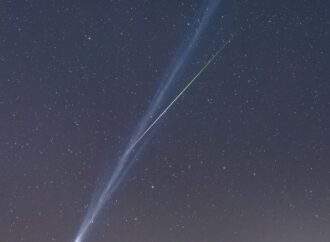
Explanation: Did this meteor come from that comet? Probably not. Although many meteors do originate from comets, there are thousands of comets that have visited the inner Solar System recently, and matching meteors to them can be tricky. And to be clear, the pictured comet is far behind the streaking meteor. Comet C/2025 R3 (PanSTARRS) was captured from Hautacam, France in April when the giant space iceberg sported impressive ion (blue) and dust tails. Sand-sized rocky debris
READ MOREA NASA telescope will likely plummet to Earth on Wednesday0
- Deep Space, NASA, SCIENCE, Science / Health, Science Mission Directorate, scientists, Space, Space Communications & Navigation Program, Space Launch System (SLS), Space Telescope, space-x-ipo, SpaceX, Technology
- November 3, 2026
A revolutionary NASA telescope is making its way back to Earth—but will not survive the journey. The United States Space Force has honed its estimate for the Neil Gehreis Swift Observatory’s fiery atmospheric reentry. According to the latest calculations, the 2,500-pound orbital telescope will largely burn-up during its descent on or around Wednesday, November 4.
READ MOREDinosaur blood found in fossils for the first time0
- Biology, Dinosaurs, SCIENCE, Science / Health, Science Mission Directorate, scientists, Space, Space Communications & Navigation Program, Space Launch System (SLS), Space Telescope, space-x-ipo, SpaceX
- November 3, 2026
Paleontologists regularly discover fossilized dinosaur bones, but they sometimes locate footprints and prehistoric shells. On rare occasions, researchers have even identified the ancient indentations of a dinosaur’s skin or feathers. But fossilized cells? Researchers have long assumed such microscopic levels of preservation were impossible.But, once again, nature has proven otherwise. In a study published today
READ MORE


Watchful mama bear Gemini wins 2026 Helicopter Mom Award0
- Animals, Bears, Biology, Environment, SCIENCE, Science / Health, Science Mission Directorate, scientists, Space, Space Communications & Navigation Program, Space Launch System (SLS), Space Telescope, space-x-ipo, SpaceX, Wildlife
- November 3, 2026
Even bears can be helicopter parents. The term coined in the 1990s by child development researchers Foster Cline and Jim Fay describes overly cautious parents who constantly monitor, control, and hover over (like a helicopter) their children’s activities out of fear. For these watchful tendencies, the U.S. Forest Service team at Tongass National Forest in
READ MORENASA Invites Media to Northrop Grumman CRS-25 Station Resupply Launch – NASA0
- Commercial Resupply, Commercial Space, International Space Station (ISS), ISS Research, Johnson Space Center, Kennedy Space Center, Northrop Grumman Commercial Resupply, SCIENCE, Science / Health, Science Mission Directorate, scientists, Space, Space Communications & Navigation Program, Space Launch System (SLS), Space Telescope, space-x-ipo, SpaceX
- November 3, 2026
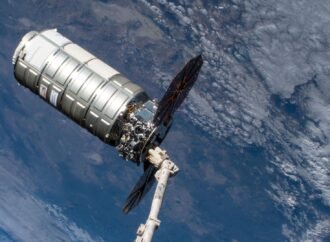
Media accreditation is open for the next launch to deliver NASA science investigations, supplies, and equipment to the International Space Station. A Northrop Grumman Cygnus XL spacecraft will launch in November to the orbital laboratory on a SpaceX Falcon 9 rocket for NASA. The mission is known as NASA’s Northrop Grumman Commercial Resupply Services 25,
READ MORETB 26-09 Measured Hammer-Tap Inputs – NASA0
- NASA Engineering and Safety Center, SCIENCE, Science / Health, Science Mission Directorate, scientists, Space, Space Communications & Navigation Program, Space Launch System (SLS), Space Telescope, space-x-ipo, SpaceX
- November 2, 2026
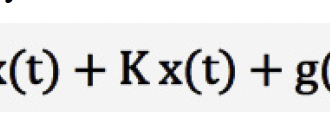
For more information, contact Joel W. Sills, Langley Research Center, joel.w.sills@nasa.gov. Download the PDF version An instrumented hammer test does not require an idealized single half-sine waveform. When the complete force and response are measured accurately, crest ripples and separated contacts remain known inputs. Force shape changes excitation, but does not inherently invalidate the record.
READ MORE

Latest Posts




Top Authors
-
matechpros@gmail.com
ADMINISTRATOR
-
OWS
ADMINISTRATOR

