
Pakistan’s Gateway to Global News, Tech Updates, and Emerging AI Trends.
Space Communications & Navigation Program
- Home
- Space Communications & Navigation Program

TB 26-09 Measured Hammer-Tap Inputs – NASA0
- NASA Engineering and Safety Center, SCIENCE, Science / Health, Science Mission Directorate, scientists, Space, Space Communications & Navigation Program, Space Launch System (SLS), Space Telescope, space-x-ipo, SpaceX
- November 2, 2026
For more information, contact Joel W. Sills, Langley Research Center, joel.w.sills@nasa.gov. Download the PDF version An instrumented hammer test does not require an idealized single half-sine waveform. When the complete force and response are measured accurately, crest ripples and separated contacts remain known inputs. Force shape changes excitation, but does not inherently invalidate the record.
READ MOREHappy 65 Years: NASA’s Johnson Space Center Then and Now – NASA0
- General, Johnson Space Center, SCIENCE, Science / Health, Science Mission Directorate, scientists, Space, Space Communications & Navigation Program, Space Launch System (SLS), Space Telescope, space-x-ipo, SpaceX
- November 2, 2026
Sixty-five years ago, a bold vision took root in Houston: a NASA center dedicated to human spaceflight. Since its founding, NASA’s Johnson Space Center has helped lead the nation’s human spaceflight program, supporting missions from Project Mercury through Artemis. Today, Johnson serves as NASA’s Center of Excellence for Human Spaceflight, and its workforce is helping
READ MOREWhat’s Up: November 2026 Skywatching Tips from NASA – NASA Science0
- Earth's Moon, Leonids, SCIENCE, Science / Health, Science Mission Directorate, scientists, Skywatching, Skywatching Tips, Space, Space Communications & Navigation Program, Space Launch System (SLS), Space Telescope, space-x-ipo, SpaceX, The Solar System
- November 2, 2026
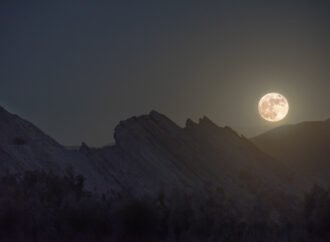
Catch Taurid and Leonid meteors, spot Mars near Jupiter, celebrate Voyager 1’s light-day milestone, and watch November’s supermoon. Around Nov. 5: Southern Taurids peak; occasional bright fireballs Around Nov. 12: Northern Taurids peak; around five meteors per hour under ideal conditions Nov. 15-16: Mars and Jupiter appear 1.2 degrees apart before sunrise Nov. 17: Shine
READ MORE

NASA’s CHAPEA Crew “Returns” to Earth – NASA0
- CHAPEA Mission 2, Crew Health and Performance Exploration Analog (CHAPEA), SCIENCE, Science / Health, Science Mission Directorate, scientists, Space, Space Communications & Navigation Program, Space Launch System (SLS), Space Telescope, space-x-ipo, SpaceX
- November 2, 2026
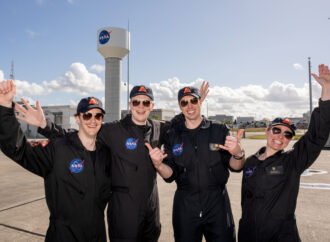
The four-member Crew Health and Performance Exploration Analog (CHAPEA) crew poses outside for the first time in more than a year following the end of their simulated Mars journey on Oct. 31, 2026. Crew members Matthew Montgomery (left), James Spicer (middle left), Ross Elder (middle right), and Ellen Ellis (right) spent more than a year
READ MOREA bull and a male donkey’s sexual relationship turns heads0
- Animals, Biology, Environment, SCIENCE, Science / Health, Science Mission Directorate, scientists, Space, Space Communications & Navigation Program, Space Launch System (SLS), Space Telescope, space-x-ipo, SpaceX
- November 2, 2026
Sex between two animals of the same sex is widespread. Over 1,000 animal species from nematode worms to penguins to cattle all dabble in same-sex interactions. But a relationship between a bull named Achille and a male donkey named Patrocolo is raising eyebrows. The pair lives on a plateau in Ethiopia, and both could have
READ MORENASA’s Hubble Uncovers Case of Missing Oxygen in Nearby Dwarf Galaxies – NASA Science0
- Astrophysics, Astrophysics Division, Galaxies, Goddard Space Flight Center, Hubble Space Telescope, SCIENCE, Science / Health, Science Mission Directorate, scientists, Sensing the Universe & Multimessenger Astronomy, Space, Space Communications & Navigation Program, Space Launch System (SLS), Space Telescope, space-x-ipo, SpaceX, Stars, Supernovae
- November 2, 2026
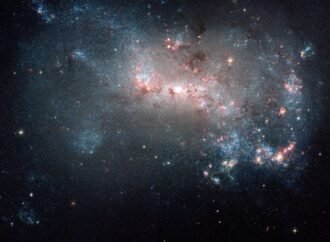
NASA’s Hubble Space Telescope just revealed a mystery in our cosmic neighborhood. In a paper published Monday in The Astrophysical Journal, researchers using Hubble studied 37 nearby dwarf galaxies — small galaxies containing a few thousand to hundreds of millions of stars — and found that much of the oxygen they expected to see is
READ MORE

Latest Posts




Top Authors
-
matechpros@gmail.com
ADMINISTRATOR
-
OWS
ADMINISTRATOR

