Jaden Caradine knew he wanted to be an engineer at eight years old. He just took a winding road to get there. Before he enrolled at Embry-Riddle Aeronautical University, before he discovered the field that would become his focus, and before he landed a Pathways internship at NASA’s Langley Research Center in Hampton, Virginia, Caradine
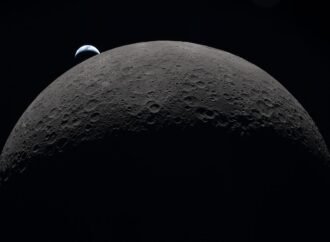
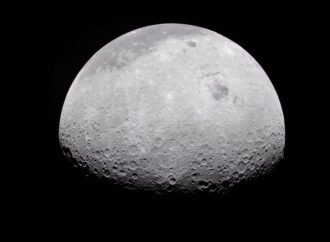
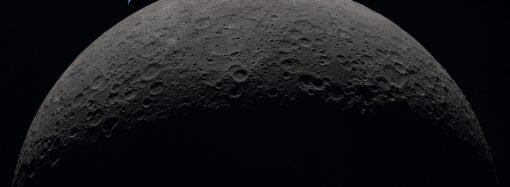
Between Aug. 11 and 12, NASA’s Lunar Reconnaissance Orbiter (LRO) captured a series of images of a new crater on the Moon. The crater formed on Aug. 5, when a SpaceX Falcon 9 upper stage impacted the surface following its January 2025 launch of the Firefly Blue Ghost 1 mission. To capture imagery of the
Using ground-based telescopes and space-based assets, NASA and SpaceX are tracking a used Falcon 9 upper stage from a commercial mission expected to impact the Moon on Wednesday, Aug. 5, near the Einstein and Bell craters. The impact poses no danger to Earth and NASA scientists are planning to collect lunar data from the event
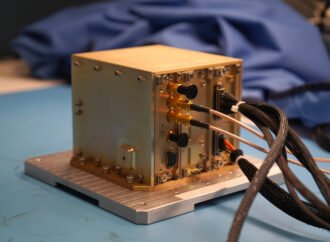
NASA delivered the NavCube3-mini payload on July 13 to Intuitive Machines for integration into Altus-1, the company’s first lunar relay satellite, marking an important milestone in the development of future lunar communications and navigation services. The lunar relays are designed to enable communications and navigation for astronauts and rovers operating at the agency’s future Moon Base. About half the size of a shoebox and weighing just 3.5 pounds, NavCube3-mini is a compact but powerful navigation
On Monday, NASA released a draft Request for Proposals (RFP) seeking feedback from U.S. companies on the next phase of its commercial space station strategy, aimed at ensuring a smooth transition of low-Earth orbit activities from the International Space Station. “NASA’s review reflects what we have been hearing from industry throughout this process. Industry believes
NASA Wednesday announced a new public‑private partnership to advance Mars science by combining the agency’s scientific leadership with commercial innovation. Under this model, NASA will provide the Aeolus atmospheric‑science instrument payload suite, while Relativity Space supplies the spacecraft, rocket, and cruise operations necessary to deliver the instruments to Mars. This partnership reflects NASA’s growing commitment