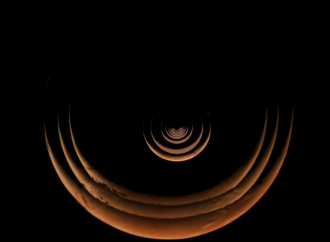
This composite of images taken by NASA’s Psyche mission shows the Mars crescent growing as the spacecraft approaches the planet for gravitational assistance from May 2 to 15, 2026. The series begins with the smaller crescent in the center of the image when Mars is furthest from the spacecraft, and progressively grows larger as the
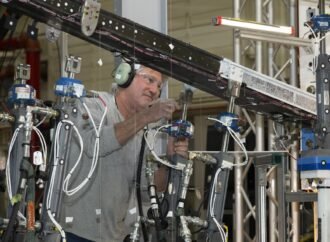
NASA researchers recently subjected a new wing design, which appears long and thin with a lightweight structural design, to a series of grueling tests to find its structural limits. What they found encouraged them about the wing’s potential, even as they pushed it beyond its intended limits. The 15-foot Structural Wing Experiment Evaluating Armor Reinforcement
RELEASE OF CONTRACT NASA has selected Chugach Intelligence Solutions LLC to provide comprehensive operations, maintenance and repair services for NASA Ames Research Center in Silicon Valley, California. The Ames Facilities Support Services II contract ensures that the center’s historic and specialized facilities are properly maintained, fully operational, and capable of supporting the missions of the
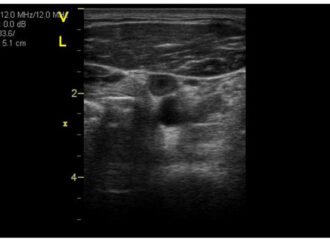
In April 2026, NASA’s Office of the Chief Medical and Health Officer (OCHMO) initiated a working group to review updated VTE case information, additional data collected revealing altered blood flow status within a cohort of astronauts, and discuss the progress of research and clinical activities aimed at mitigating the risk of VTE during spaceflight with
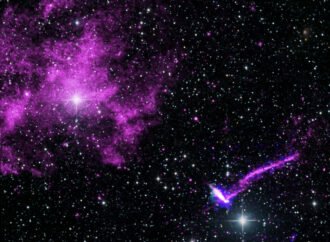
This composite image, released on July 9, 2026, shows the region around a pulsar (a neutron star with a strong magnetic field that spins incredibly fast) within the Lighthouse Nebula. The image contains X-ray data from NASA’s Chandra X-ray Observatory in purple, X-rays from NASA’s IXPE (Imaging X-ray Polarimetry Explorer) in blue, and radio emissions
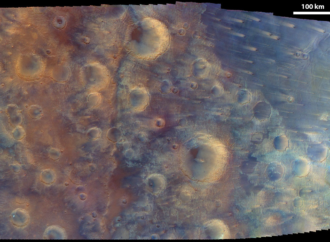
Captured by the multispectral imaging instrument on NASA’s Psyche mission, this is a color-enhanced mosaic created from four individual images acquired on May 15, 2026, during the spacecraft’s flyby of Mars. Psyche traveled from right to left (northeast to southwest on Mars) during the six minutes it took to acquire the images for this mosaic,