“My Father’s Kora” (“La Kora de Mon Père”), a Benin-Switzerland-Germany production, will have its world premiere Aug. 9 at Locarno’s Open Doors section, which has focused on 42 countries of the African continent since 2025. The film follows Souleymane Everston Adowo Freudenreich, an Afro-German trans man who travels to Dakar, Senegal, to repair his father’s
“My Father’s Kora” (“La Kora de Mon Père”), a Benin-Switzerland-Germany production, will have its world premiere Aug. 9 at Locarno’s Open Doors section, which has focused on 42 countries of the African continent since 2025.
The film follows Souleymane Everston Adowo Freudenreich, an Afro-German trans man who travels to Dakar, Senegal, to repair his father’s kora. Classified as a harp or lute, repair of the kora serves as a metaphor for Souleymane’s search for identity, belonging and acceptance within a traditional Muslim culture.
“It’s a film about repair, memory, and transmission. The film listens as much as it observes, using a poetic and sensory language to explore identity, silence, faith, and the healing power of music, sewing, and the ocean. It is a quiet reflection on what can be repaired, and what remains uncertain,” says Beninese director Aymar Esse.
“It is not an activist film in the strict sense. It is an invitation to see the other without rushing to define them, to recognize a human being before a category, and to understand that cinema can sometimes open a small breach in the wall of certainties,” he adds.
Produced through Esse’s SunRise Films and co-produced by Aline Bonvin Film Video (Switzerland), Seera Films (Germany) and 274 Studio (Switzerland), the film was developed within the framework of Steps’ Generation Africa program, with the financial support of the Swiss Cooperation Office in Benin. It will have its German premiere at the Afrika Film Festival Köln in September.

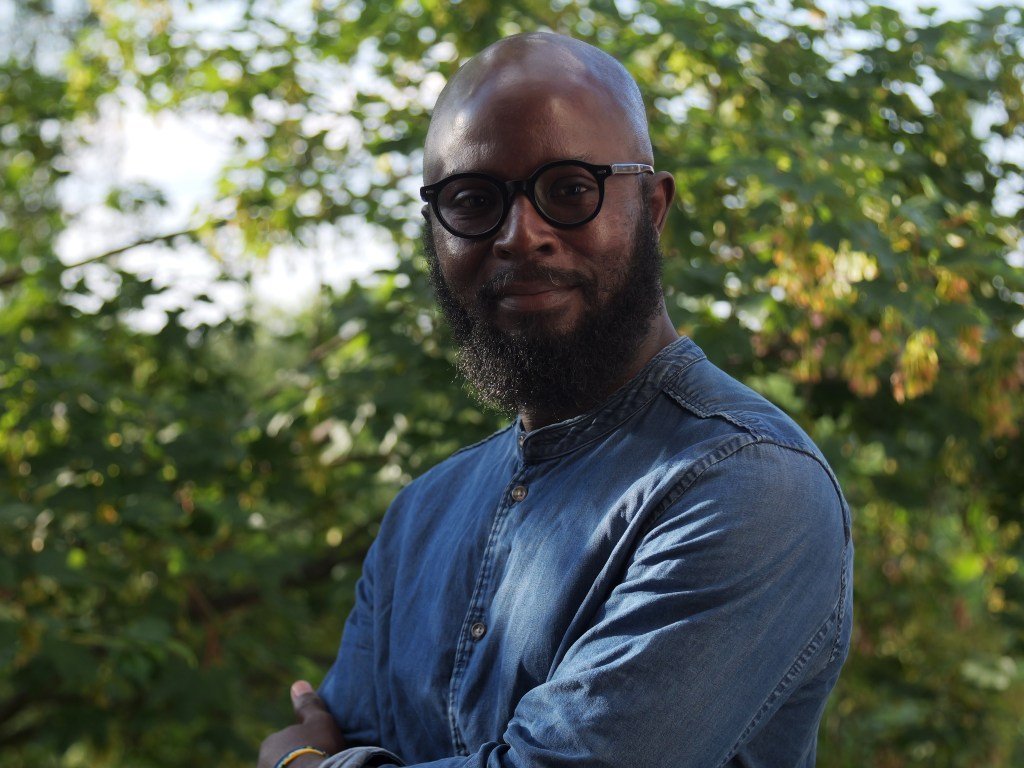
Ayéman Aymar Esse
Variety interviewed Esse before the film’s world premiere.
Can you tell us a little bit more about the kora?
Aymar Esse: The kora is, for me, a profoundly living instrument, almost a voice in its own right. Born in the Mandingue cultural world, it carries a long history of transmission, memory, and poetry, and it is deeply connected to the griots, those guardians of speech, genealogy, and storytelling. In their hands, the kora is not only a musical instrument, it becomes a link between generations, between the living and the ancestors, between the past and the present. I have always been moved by its sound, something very soothing, very enveloping, almost like water flowing.
How did you decide to use the kora a metaphor for Souleymane’s journey to Senegal?
Esse: The idea of using the kora as a metaphor came from the fact that we have a musical instrument that is broken and a character who is also trying to understand himself and find where he belongs.
Bringing the kora back to Senegal made much more sense to me. There, it could find original replacement parts, a new skin, which I like to think of in relation to skin color, an old calabash perhaps replaced by a new one, and new strings. For me, each part of the kora carries a meaning: the skin speaks to the body, the strings suggest a connection to Senegal, and the neck feels to me like the backbone.
What is the cultural view on LGBTQ issues in Senegal?
Esse: Senegal remains a very conservative country when it comes to homosexuality, and in recent years the legal and social climate has become even harsher toward LGBTQ people. So the warmth and acceptance shown in the film should not be read as the rule, but as the fragile light of a singular family story.
For me, Souleymane comes first as a person, as a full human being, before any label. In the film, what matters is not to reduce him to his trans identity, but to observe how he is received with unconditional love. At that point, his identity no longer weighs in the balance in the same way, because love has already made its choice.
Can you talk about the ballroom scene as a safe space for the LGBTQ community?
Esse: I did not know ballroom culture myself; it was a discovery for me. I realized how deeply people can speak to one another there, how they can breathe together in a space that becomes almost a language of its own. But beyond the ballroom itself, what stayed with me was another question. What is a safe space, really? Who creates it? Who protects it? And how do we find it in a world that often feels unsafe?
Today, aren’t we all searching for some kind of shelter? From violence, from political pressure, from climate change, from loneliness, from the simple difficulty of being alive? And yet, maybe a safe space is not only something we are given. Maybe it is something we create, quietly, through trust, through shared language, through the people who see us and let us be.
Check back often for more exciting news!