
Kioxia may have become Japan’s most valuable company amid the AI boom, but South Korea’s chip giants still have a structural advantage, according to the Bain Capital executive who led the company’s purchase from Toshiba. “The reason South Korean companies are so successful in the semiconductor industry is the powerful vertical leadership and ownership structures
Kioxia may have become Japan’s most valuable company amid the AI boom, but South Korea’s chip giants still have a structural advantage, according to the Bain Capital executive who led the company’s purchase from Toshiba.
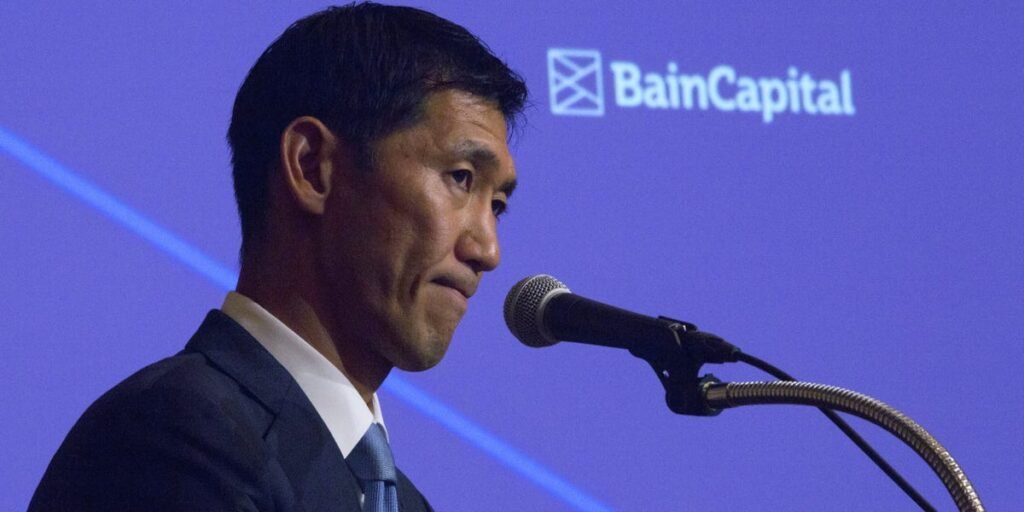
“The reason South Korean companies are so successful in the semiconductor industry is the powerful vertical leadership and ownership structures of chaebol conglomerates like Samsung and SK,” Yuji Sugimoto, Bain Capital’s representative in Japan, told Nikkei in an interview published Wednesday.
“In semiconductors, if you can’t commit, you fall behind and the game is over. I think it’s difficult to run that type of business under the governance of large Japanese corporations,” he added to the media outlet.
Sugimoto led Bain’s acquisition of Toshiba Memory, which was spun off from Toshiba in 2017 before being bought by a Bain-led consortium for around 2 trillion yen in 2018. The company was renamed Kioxia the following year.
Sugimoto said Kioxia’s turnaround would not have been possible if it had remained under Toshiba.
“It would have been impossible to continue with large investments and at the same time record huge losses. Other divisions of the company would have objected,” he said.
Bain’s continued to invest during the memory crisis even as Kioxia’s losses mounted, and the move finally paid off when AI-driven demand for memory chips transformed Kioxia’s fortunes.
“In 2018, the term ‘AI’ was not widely used and we certainly did not fully anticipate or understand the type of demand we are seeing today,” Sugimoto said.
Kioxia shares have risen more than 4,000% since its IPO in December 2024.
Bain has since exited its investment, and managing partner David Gross told Bloomberg Television on Thursday that the firm no longer has a stake in Kioxia.
On Thursday, Kioxia shares rose 8.5% by midday, helping the Nikkei 225 gain 2%.
South Korea’s Kospi was down 1.7% as index heavyweight Samsung Electronics fell 2.3%, while SK Hynix traded 2.3% higher.