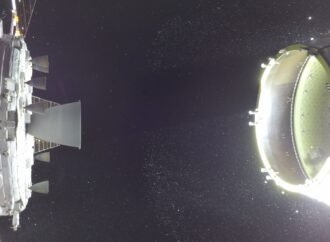
As NASA returns humans to the lunar surface and establishes a long-term presence on our closest celestial neighbor, the agency and commercial human landing system providers Blue Origin and SpaceX have streamlined the designs and changed both concepts of operations for its future crewed landers. Since NASA established initial contracts with Blue Origin and SpaceX
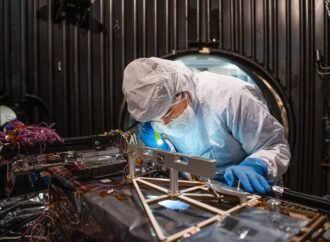
NASA has declared “wrenches down” on the first completed payload designed for Artemis astronauts to deploy on the Moon’s surface. Engineers working on NASA’s Lunar Environment Monitoring Station, or LEMS, have completed hardware development and testing and the payload is ready for its permanent home near the lunar South Pole. With the hardware complete, LEMS
As NASA pushes the boundaries of exploration and innovation for the benefit of humanity, the agency is looking for partners to share mission stories covering Artemis Moon missions, nuclear propulsion, aeronautics, and more. NASA published an Announcement for Proposals on May 21 asking filmmakers, documentarians, songwriters, storytellers, poets, and others to submit proposals to partner
Organizations interested in launching CubeSats on future Artemis missions should respond to NASA’s request for information (RFI) by Monday, June 1, for initial consideration. “The SLS (Space Launch System) rocket and the Artemis missions provide great opportunities for teams to conduct important, science and technology investigations that contribute to the expansion of human space exploration,” said
Lee esta historia en español aquí. To achieve the national goal of landing American astronauts on the surface of the Moon and maintaining U.S. superiority in exploration and discovery, NASA announced Feb. 27 it is increasing its cadence of missions under the Artemis program, standardizing the SLS (Space Launch System) rocket configuration, and adding a new