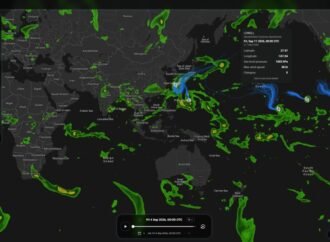
We have all been caught out by a vague weekend forecast. You check your phone on a Saturday morning, see a generic prediction of possible showers across regional Victoria or coastal New South Wales, decide to wash your car or plan a road trip, and within two hours a rogue storm cell dumps rain straight
OpenAI is changing its model launch strategy as its technology becomes more powerful and the potential for its misuse grows—especially following the July incident in which the AI models it was testing autonomously planned and executed a cyberattack against AI company Hugging Face. The company’s next model, Astra, comes out “soon,” OpenAI said. It said
Bwindi Impenetrable National Park in southwestern Uganda is famous for the endangered mountain gorillas that inhabit its lush, misty highlands. It’s also home to around 120 other species of mammal, 350 types of bird and hundreds of plant varieties — and, on its borders, people and livestock. That’s a recipe for what epidemiologists call spillover,
You probably know by now that the AI models powering ChatGPT, Gemini, Claude, and other chatbots are trained on seemingly infinite databases of published works, containing hundreds of millions of books, online articles, academic papers, and basically anything you can find on the internet. Most published authors have, without their knowledge or consent, contributed to
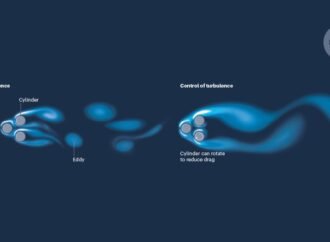
Turbulent fluid flow is a persistent challenge in physics and engineering: it disrupts aviation and reduces the efficiency of wind turbines. In the body, disturbed blood flow can even contribute to problems in the circulatory system. Turbulence is also complex and unpredictable, so devising strategies to control it is notoriously difficult. Now, writing in Nature,
Gommers, J. et al. Interval cancer, sensitivity, and specificity comparing AI-supported mammography screening with standard double reading without AI in the MASAI study: a randomised, controlled, non-inferiority, single-blinded, population-based, screening-accuracy trial. Lancet 407, 505–514 (2026). Article PubMed Google Scholar Lu, M. Y. et al. A multimodal generative AI copilot for human pathology. Nature 643, 466–473