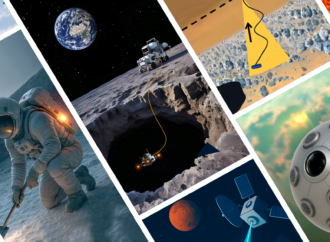
NASA’s Innovative Advanced Concepts (NIAC) program has created 18 new awards to support visionary ideas to improve aerospace technologies in areas ranging from exploring the solar system to understanding the universe. The 18 NIAC Phase I grants total $3.2 million. Each grant provides up to $175,000 for an initial nine-month investigation. NIAC projects deal with
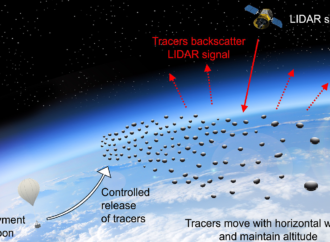
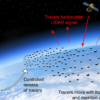
Benjamin SchäferRare Technologies, Inc. We propose a new approach for atmospheric sensing at altitudes of 30 to 100 km using photophoretically levitating tracers. These lightweight structures take advantage of sunlight to remain suspended for up to months at controlled altitudes and can be tracked remotely using lidar or satellite radar. Unlike natural sprays, these tracers
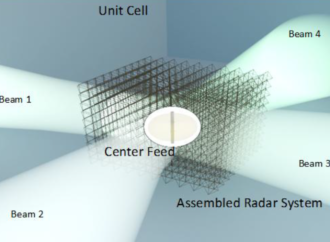
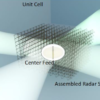
David BlacksmithDuke University The growing population of space vehicles and satellites motivates increasingly powerful technologies for space situational awareness (SSA). While the US Space Surveillance Network (SSN) can monitor objects up to approximately four inches in size using, for example, the latest space fence upgrade, associated requirements limit implementation to ground-based tracking of objects in
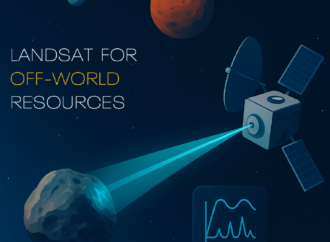
Pablo Sobron SanchezSETI Institute This proposal explores a new class of survey spacecraft that maps minerals from orbit using Raman spectroscopy during high-speed flybys, without landing, sample return, or prolonged dwell. If feasible, this concept would allow NASA to evaluate ice and ilmenite on the Moon, mineral content on asteroids, and volatile minerals on the
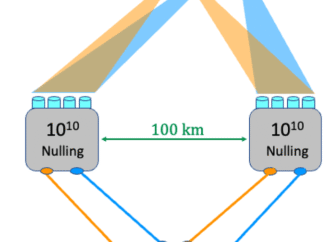
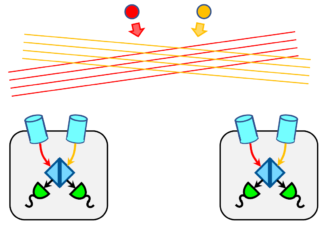
1 minute read Preparations for upcoming moonwalk simulations underway (and underwater) Graphic representation of the Mapping Alien Continents concept. Paul Stankus Pablo StankusBrookhaven Scientific Associates The scientific objective of the proposed work will be to reconstruct the image, that is, resolve the surface features, of an Earth-like exoplanet around a nearby star, seen in visible light.
Pablo StankusBrookhaven Scientific Associates The scientific objective is to enable a new method to observe gravitational waves at low frequencies, based on the GW astrometric signature: gravitational waves passing through the Earth will cause a (very small) coordinated apparent movement of all celestial objects. Our innovation is to implement a new approach for precision astrometry