
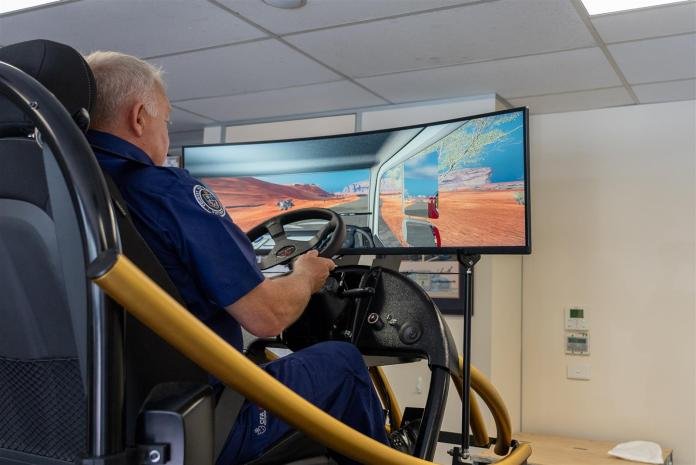
The Country Fire Authority in Victoria is taking a massive leap forward in how it prepares its volunteers for the rigours of emergency response. Through a new partnership, the CFA is turning to Virtual Reality technology to enhance driver training and safety. The cutting-edge simulators, being made by Motum Simulation, will support the existing Volunteer Driving Training Program, which has already
The Country Fire Authority in Victoria is taking a massive leap forward in how it prepares its volunteers for the rigours of emergency response. Through a new partnership, the CFA is turning to Virtual Reality technology to enhance driver training and safety.
The cutting-edge simulators, being made by Motum Simulation, will support the existing Volunteer Driving Training Program, which has already seen more than 1,600 heavy vehicle licences approved, the delivery of 10 driver training trucks and more than 55 driving courses scheduled across Victoria.
This move marks a significant shift in the way traditional emergency services approach skills maintenance and high-stakes education. By leveraging immersive technology, the CFA can now simulate dangerous road conditions without putting members or expensive hardware at risk.
The initiative is designed to provide a safe, controlled environment where drivers can practice responding to emergencies under pressure. It is a prime example of how modern tech is being used to solve age-old logistical challenges in the emergency services sector.
A new era for driver training
The core of this program involves the use of VR headsets and motion-based platforms that mimic the feel of a real fire truck. This allows trainees to experience the weight, handling, and braking distances of heavy vehicles in various weather conditions.
Traditionally, this kind of training required taking trucks off the road and finding large, open spaces for drills. With the introduction of VR, the CFA can deliver consistent, high-quality training regardless of the weather or vehicle availability.
The simulation software includes a variety of scenarios, from navigating busy urban intersections to handling narrow, winding rural tracks. This diversity ensures that drivers across the state are prepared for the specific challenges of their local patches.

Enhancing safety through simulation
Safety is the primary driver behind this technological investment, as responding to an emergency is one of the most dangerous tasks a volunteer performs. The VR system allows drivers to make mistakes in a digital world so they do not make them in the real one.
By experiencing “near-miss” scenarios in a headset, volunteers can develop the muscle memory and split-second decision-making skills needed for the road. This proactive approach to safety is expected to reduce incidents involving emergency vehicles during blue-light responses.
The system also provides instant feedback to the user, highlighting areas where they can improve their steering, speed, or situational awareness. This data-driven approach ensures that training is not just immersive, but also highly effective and measurable.
The technology behind the headset
The CFA is utilising advanced VR hardware that provides a high-resolution, 360-degree view of the environment. This level of immersion is crucial for ensuring that the skills learned in the simulator translate directly to the driver’s seat of a Scania or Isuzu tanker.
The software has been tailored specifically for Australian conditions, featuring local road signs, markings, and vegetation. This attention to detail helps volunteers feel right at home as they navigate the virtual landscape of Victoria.
“This is an exciting and innovative project that will provide our members with a safe and realistic environment to practice their driving skills.”
Jason Heffernan, Chief Officer, CFA.
Motum Simulation offer a range of industry driver education options, inlcuding industries like emergency services, heavy vehicle, port services, mining and of course motor racing.
https://www.motumsimulation.com/driver-training-industry

Bridging the gap for regional volunteers
One of the biggest hurdles for the CFA has always been the geographical spread of its thousands of volunteers across Victoria. Bringing every driver to a central training facility is often impractical and time-consuming for people who already give so much of their time.
These VR units are designed to be mobile, meaning they can be transported to regional brigades and remote stations. This democratises access to elite-level training, ensuring a volunteer in Mildura has the same opportunities as one in Geelong.
By bringing the training to the members, the CFA is making it easier for volunteers to maintain their competencies. It reduces the “time tax” on volunteers, allowing them to focus on protecting their communities rather than travelling for hours to attend a course.
Cost effectiveness and sustainability
While the initial investment in VR hardware and software development is significant, the long-term savings are substantial. The CFA can reduce the wear and tear on its fleet, which currently undergoes significant stress during traditional driver training sessions.
There is also a significant saving in fuel costs and a reduction in the carbon footprint associated with moving heavy tankers for practice drills. Virtual trucks do not require diesel, and they do not need their tyres replaced after a heavy braking exercise.
Furthermore, the ability to reset a scenario with the click of a button means more repetitions can be completed in a single session. This efficiency allows the CFA to train more drivers in less time, increasing the overall operational readiness of the organisation.
A commitment to innovation
The rollout of VR training is part of a broader digital transformation strategy within the CFA to modernize its operations. It shows a willingness to embrace “Industry 4.0” concepts to improve the safety and efficiency of one of the world’s largest volunteer fire services.
As the technology evolves, there is potential for these VR simulations to expand beyond driving into other areas of firefighting. Future modules could include pump operation, structural fire tactics, or hazardous material management.
“This technology will not replace on-road training, but it will certainly enhance it and ensure our drivers are better prepared than ever before.”
Jason Heffernan, Chief Officer, CFA.
Getting behind the virtual wheel
The CFA has confirmed that the VR driving simulators will be rolled out across the state in the coming months. Brigades will be scheduled for sessions, allowing members to familiarise themselves with the new tech and refine their skills.
The feedback from initial pilot programs has been overwhelmingly positive, with volunteers praising the realism and the ability to practice rare scenarios. It is clear that the future of emergency service training in Victoria has a digital edge.
For those interested in the technical side, the platform uses high-end PC-based VR to ensure the frame rates remain high and the latency remains low. This is vital for preventing motion sickness and ensuring a professional training experience for all ages.
For more information, head to https://www.cfa.vic.gov.au




















Leave a Comment
Your email address will not be published. Required fields are marked with *