
From the star of its namesake pie to a supporting player in countless side dishes, the pecan has earned a place on Thanksgiving tables across the United States. But before it becomes candied, chopped, or baked, it hangs from the branches of Carya illinoinensis—a species of hickory in the walnut family native to North America.
From the star of its namesake pie to a supporting player in countless side dishes, the pecan has earned a place on Thanksgiving tables across the United States. But before it becomes candied, chopped, or baked, it hangs from the branches of Carya illinoinensis—a species of hickory in the walnut family native to North America. Many U.S.-grown pecans come from orchards in Georgia, the state that has historically led the nation in production.
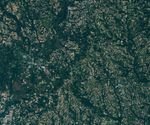
One hotspot of pecan cultivation is in the southwest part of the state, around Albany, in Dougherty County. The OLI (Operational Land Imager) on Landsat 8 captured this image of the area and neighboring counties on October 23, 2026. That date falls within the pecan harvest season, which typically runs from October into December. In addition to pecans, other crops such as peanuts, cotton, and corn are also grown in the area.
Landsat observations like these contribute to the Cropland Data Layer, an annual map of crop types across the contiguous United States produced by the U.S. Department of Agriculture’s National Agricultural Statistics Service. The 2025 map shows pecan groves clustered along the Flint River within the Coastal Plain. Pecan trees need abundant water, and they generally do well in the area’s well-drained sandy soils that sit above the Floridan aquifer system that growers can tap for irrigation.
In the late 1800s, Georgia had less than 100 acres (40 hectares) of pecan orchards. Then, in the early 1900s, southwest Georgia’s Dougherty and Mitchell counties underwent a pecan boom when thousands of acres were planted and sold to investors. By the end of the 1950s, Georgia led the nation in pecan production, producing over 17 million pounds, according to 1959 agricultural census numbers.
In recent decades, pecan production has grown in other states, such as New Mexico and Texas. Georgia faced challenges after Hurricane Michael damaged orchards in October 2018, and Hurricane Helene dealt another blow when it swept inland in September 2024. Even so, USDA numbers show that the state’s production has topped 100 million pounds in each of the past three years (2023-2025).
In 2026, a wet summer in parts of the state helped scab take hold. The fungal disease causes brown spots on pecan twigs, leaves, and nut shucks. Meanwhile, some growers still recovering from Hurricane Helene reported the return of a solid crop.
NASA Earth Observatory images by Lauren Dauphin, using Landsat data from the U.S. Geological Survey. Story by Kathryn Hansen.
- Farm Monitor (2026) Georgia Pecan Growers Face Relentless Scab Pressure and Helene Recovery at 2026 Fall Field Day. Accessed November 24, 2026.
- UGA Today (2019, November 27) Georgia is the proud pecan capital of the U.S. Accessed November 24, 2026.
- University of Georgia, Pecans. Accessed November 24, 2026.
- University of Georgia College of Agricultural & Environmental Sciences (2026) 2026 Fruits and Tree Nuts Outlook. Accessed November 24, 2026.
- University of Georgia College of Agricultural & Environmental Sciences, Pecan Water Requirements and Irrigation Scheduling. Accessed November 24, 2026.
- U.S. Department of Agriculture’s National Agricultural Statistics Service, 1959-AgCensus. Accessed November 24, 2026.
- Wells, L. (2014) Pecan Planting Trends in Georgia. HortTechnology, 24(4), 475-479
Check back often for more exciting news!