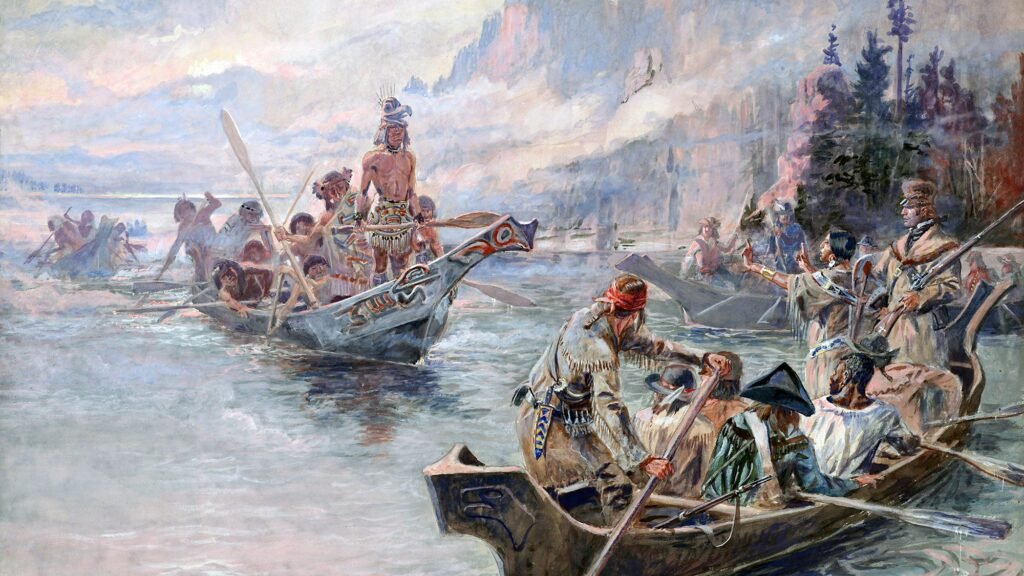
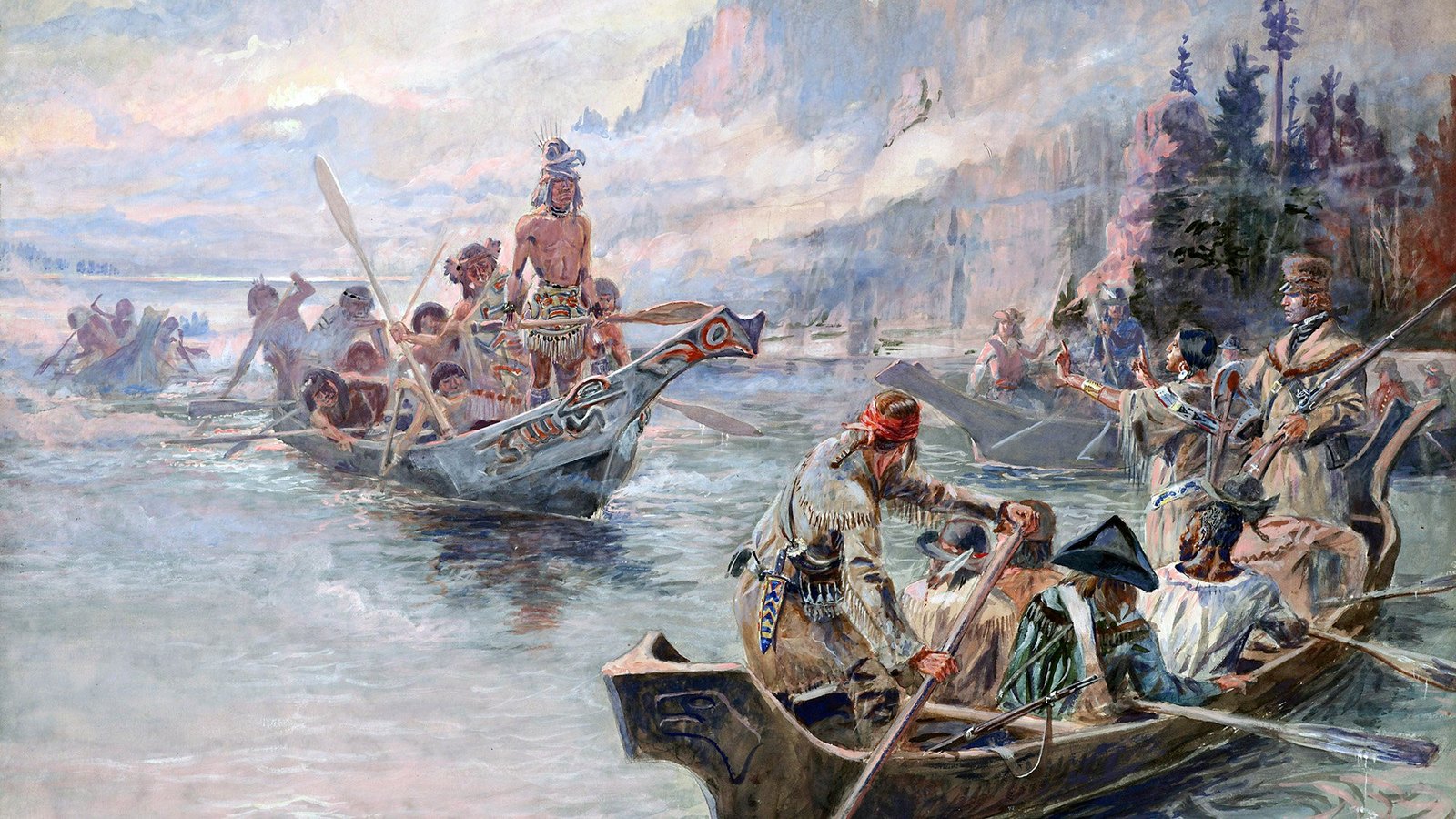
The Corps of Discovery Expedition set out in 1804, directed by President Thomas Jefferson to survey the United States’ newly acquired Louisiana Purchase. The exploration forms a core piece of early U.S. history. Picture a scene from the journey: It’s a cool morning, the silence punctuated by birdsong and the rustle of the breeze through
The Corps of Discovery Expedition set out in 1804, directed by President Thomas Jefferson to survey the United States’ newly acquired Louisiana Purchase. The exploration forms a core piece of early U.S. history. Picture a scene from the journey: It’s a cool morning, the silence punctuated by birdsong and the rustle of the breeze through the cottonwood trees. To one side, Commander William Clark, his rifle leaning against a plum tree and his rucksack nearby, squats over a latrine pit, unceremoniously heeding the call of nature.
The Louisiana Purchase constituted a territory of around 828,000 square miles, which the U.S. had bought from France in 1803. This was, it is worth noting, largely without the consent of the Indigenous groups who had lived there for millennia. The purpose of the expedition was threefold: to find a practical trade route westward to the Pacific coast, to explore and document the territory, and to stake a claim to the area before any other European powers butted in. Led by Meriwether Lewis and William Clark, the 40-man team, plus their guide Sacagawea, spent more than two years trekking westward.
Believe it or not, the holes that were used as toilets along the march to the Pacific have been invaluable for archaeologists and historians. This is thanks especially to a type of treatment included in the expedition’s medical kit.
How Lewis and Clark went to the bathroom
Everybody poops—it’s a universal human need. But most accounts of the Corps of Discovery’s journey leave out the details of how the Corps members dealt with bathroom business.
Each of the campsites where the expedition spent time had an accompanying latrine pit, situated well away from camp for sanitary (and privacy) reasons. The latrines would have seen a lot of use, because the Corps of Discovery’s diet wasn’t the best for gut health.
While the expedition members relied heavily on foraged and hunted food, they also carried backup rations. These included nearly 14,000 pounds of dry goods, including flour, salt, coffee, dried pork, and lard. All told, each member of the Corps ate around nine pounds of meat per day. All of that protein without lots and lots of fiber added up to frequent constipation. The untreated water they drank from rivers and creeks they encountered probably didn’t help their circumstances. Enter…Dr. Rush’s Bilious Pills.
The mercury constipation pills known as “thunderclappers”
In 1803, as preparation for the upcoming expedition, William Clark traveled to Philadelphia for a two-week medical crash course with Dr. Benjamin Rush. Rush was a prominent physician in his day, and a Founding Father of the United States. His signature is one of the 56 on the Declaration of Independence.
Rush taught Clark some basic field skills, such as bone-setting and wound treatment. Clark left Philadelphia with new skills and a well-stocked medical kit that included 50 dozen of Doctor Rush’s Bilious Pills. These were compounded tablets about the size of a raisin, composed of powerful laxative ingredients. The pills were nicknamed “thunderclappers” because of the speed with which they took effect. The main ingredient of the thunderclappers was calomel, or mercury chloride.
Mercury, historically also called quicksilver, has been thought to have curative effects for centuries. It’s a metal that is liquid at room temperature, which seems miraculous in and of itself.
It was also a popular treatment for syphilis. This is not to say it was an effective treatment for syphilis. When it was administered for that disease, slowly in low doses, patients were more likely to die from mercury poisoning than from the STI.
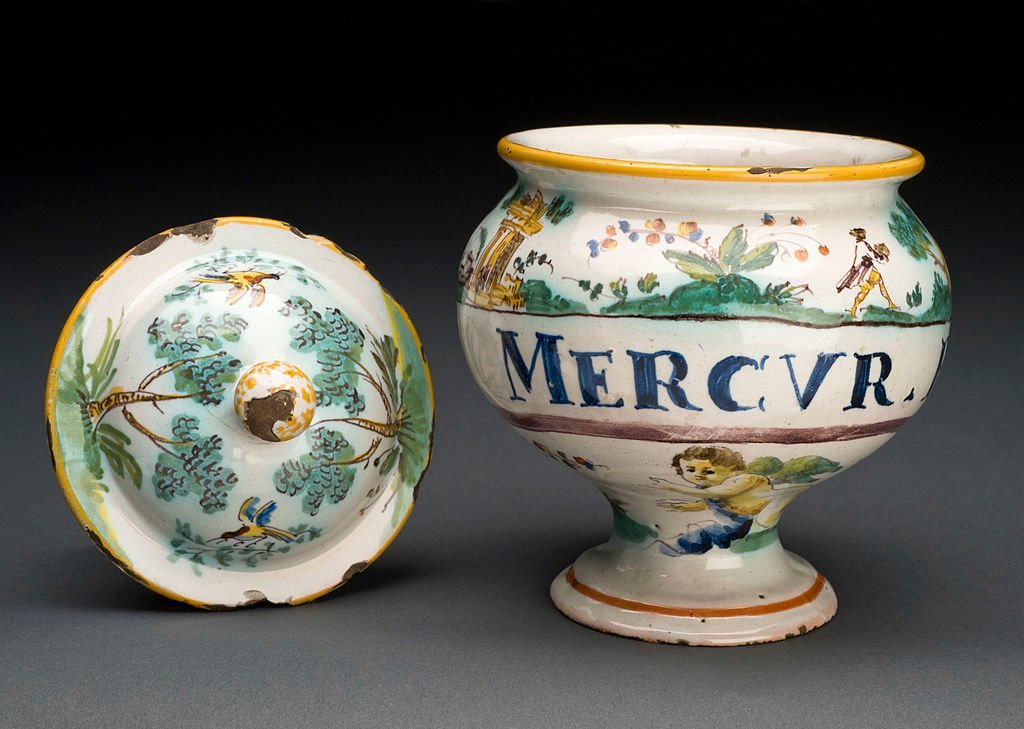
When taken in larger doses, though, as in the thunderclapper pills, it prompted a quick evacuation, the body’s way of ejecting poison. The men of the Lewis and Clark expedition used these pills freely as a way to compensate for their high-protein and low-fiber diet. As a result, all the latrine pits they used between the Midwest and the Pacific coast were laced with high concentrations of mercury.
Lewis and Clark pooped mercury. Today archaeologists use it to map their route.
As many an environmentalist will caution, mercury does not decompose when it’s in the ground. It stays put, and is detectable through modern soil testing techniques. The 600-plus latrines dug and used by the Corps of Discovery form a trail of their own, marked by mercury.
The expedition was a government-sanctioned military expedition, so Lewis and Clark both kept copious notes on every aspect of their travels. Historians have tried to pinpoint the locations of these camps based on the expedition journals, with minimal success.
The only campsite that archaeologists have been able to confirm so far is the Traveler’s Rest camp, just outside of Missoula, Montana. This is all thanks to the remains of Dr. Rush’s Bilious Pills, which left enough mercury in the ground to differentiate the remains of a latrine pit (or “sink” as they were called in the 1800s) from animal burrows or agricultural ditches.
Archaeology is all about reconstructing the lives of people in the past, and it’s worth remembering that this means all aspects of life. Our own bodily functions remind us that we all share complex and interwoven histories, and that even the most mundane parts of our lives can be important in the future.
In That Time When, Popular Science tells the weirdest, surprising, and little-known stories that shaped science, engineering, and innovation.
Related ‘That Time When’ Stories

2026 Popular Science Home of the Future Awards
For more tech updates, stay tuned to our blog.