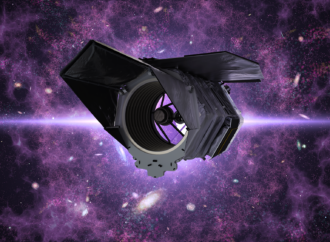
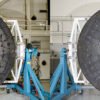
Set to launch on Sunday, Aug. 30, NASA’s Nancy Grace Roman Space Telescope will empower astronomers to explore vast regions of the cosmos and settle essential questions in the areas of dark energy, dark matter, planets outside our solar system, and the formation and growth of galaxies over cosmic time. Key contributions to Roman’s mission
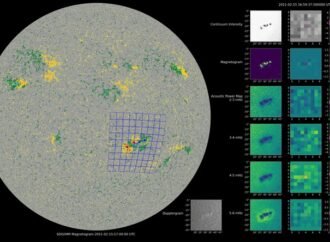
As humanity looks to the Moon and stars for future exploration, predicting space weather — conditions in space primarily driven by the Sun — is more important than ever. Now, a team of astrophysicists and data scientists with NASA’s COFFIES (Consequence Of Fields and Flows in the Interior and Exterior of the Sun) has developed a
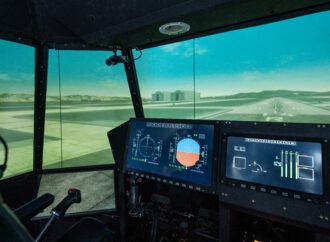
Imagine stepping into a machine that can make you feel like you’re flying a spacecraft, piloting a next generation air taxi, or landing on the Moon, all without leaving the ground. NASA’s Vertical Motion Simulator, the largest of its kind in the world, does exactly that. And now, with new upgrades, it’s more powerful and
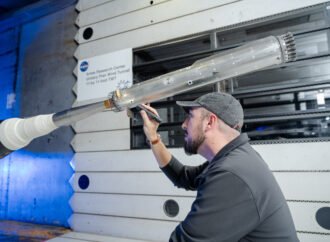
NASA and its industry partners are preparing for next year’s Artemis III demonstration mission by completing new wind tunnel tests on SpaceX’s Super Heavy Version 3 rocket booster. The tests, conducted at NASA’s Ames Research Center in California’s Silicon Valley, focused on better understanding the extreme aerodynamic forces the rocket can experience during re-entry. The
NASA is working with industry to advance the next phase of cislunar infrastructure for the agency’s Artemis and Lunar Base program, including orbital assets and demonstrations. Under a contract awarded to Advanced Space, the agency’s CAPSTONE 02 mission will demonstrate rendezvous and proximity operations, autonomous navigation, and cislunar communication capabilities while continuing to characterize the
As NASA prepares for a sustained human presence on the Moon, missions will increasingly require spacecraft that can navigate and communicate without a direct connection to Earth. NASA’s Cislunar Autonomous Positioning System Navigation and Operations Technology Experiment, or CAPSTONE, validated and advanced these capabilities. Designed to test and validate technologies in lunar orbit, CAPSTONE launched