If you’ve ever had your car start sluggishly, or not at all, on a particularly frigid winter morning, you know standard batteries do not like extreme cold. That’s why NASA researchers are working to develop a battery that could function in the brutal cold of the Moon’s South Pole, where nighttime temperatures plunge to minus
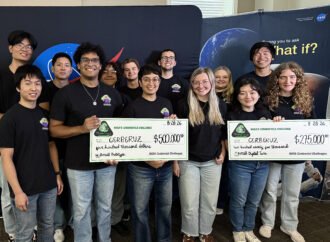
NASA named a team from the Massachusetts Institute of Technology (MIT) as the first prize winner for Phase 2 of the agency’s LunaRecycle Challenge, which focused on developing solutions for reducing waste during missions to the Moon or deep space by recycling common materials, like fabrics, plastics, foam, and metals. The Composites for Extraterrestrial Recycling By Engineering the Reuse and Upcycling of Zotek (CERBERUZ) team, comprised of undergraduate, graduate, and doctoral students at MIT, received a total of $775,000 in awards. The technology grinds mixed trash into a fine powder,
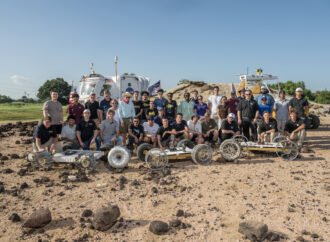
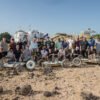
As NASA prepares to establish the Moon Base, advancing surface mobility will be key to helping crews and robotic systems travel farther across the lunar surface. To help advance that capability, the Rock and Roll with NASA Challenge invited public innovators to design and build next-generation lunar rover wheels. Five teams from 128 submissions and 49 countries advanced to the final phase of the
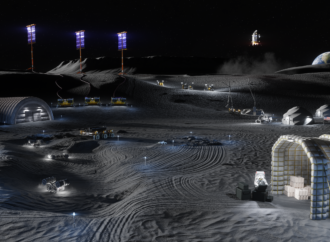
NASA is asking U.S.-based collegiate teams to submit bold, original concepts to the 2027 edition of a student challenge focused on aerospace innovation that could help the agency envision a future on the Moon shaped by new technology. The latest NASA Revolutionary Aerospace Systems Concepts – Academic Linkage (RASC-AL) competition invites student teams to explore new operations paradigms and advance the technologies needed to
NASA is working with industry to advance the next phase of cislunar infrastructure for the agency’s Artemis and Lunar Base program, including orbital assets and demonstrations. Under a contract awarded to Advanced Space, the agency’s CAPSTONE 02 mission will demonstrate rendezvous and proximity operations, autonomous navigation, and cislunar communication capabilities while continuing to characterize the
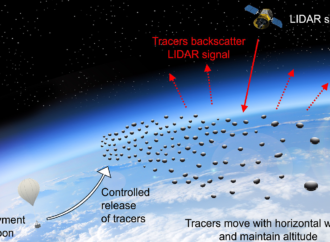
Benjamin SchäferRare Technologies, Inc. We propose a new approach for atmospheric sensing at altitudes of 30 to 100 km using photophoretically levitating tracers. These lightweight structures take advantage of sunlight to remain suspended for up to months at controlled altitudes and can be tracked remotely using lidar or satellite radar. Unlike natural sprays, these tracers