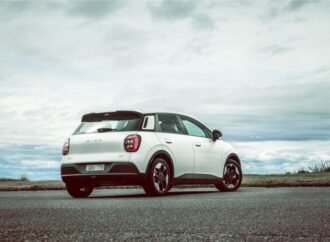
The Australian electric vehicle landscape has transformed rapidly over the past few years. What used to be a market dominated by premium price tags and limited choices has evolved into a fiercely competitive arena where affordability is the primary battleground. Chinese car makers have played a massive role in democratising electric mobility across the country.
Mathematician James Maynard has spent a lot of time this past year “soul searching.” A professor at the University of Oxford and winner of the prestigious Fields Medal, Maynard told The Verge he’s been grappling with the future of his field as the traditionally slow-moving discipline hurries to adapt to AI. Days before we spoke,
Every day seems to brings fresh news of an AI agent going “rogue.” Whether that’s compromising Hugging Face, hacking a gym website, or creating its own fake profiles to socially engineer an intrusion, AI models are increasingly behaving like bad actors. So, the AI labs that make the models doing the hacking are expanding their
OpenAI has bought back $7 billion worth of shares from employees at the privately held frontier AI lab as part of an effort to provide liquidity to its workforce. The deal, reported by Bloomberg, valued OpenAI at $852 billion, the same as its most recent fundraising round in March, which added $122 billion to the
Mitsubishi Motors is finally jumping back into the pure electric vehicle race in Australia. While it’s not the electric version of the EVO that many want so dearly, instead, the Japanese automaker has confirmed the all-new ASX VR-e battery electric vehicle will hit Australian showrooms in the fourth quarter of 2026. It has been a
X continues to expand its features and functionality including the very popular introduction of the financial offering, known as X Money. This is all in pursuit for that illusive label of the “everything app”. Before examining what it would take to launch X Money in Australia, it helps to understand what the product actually does