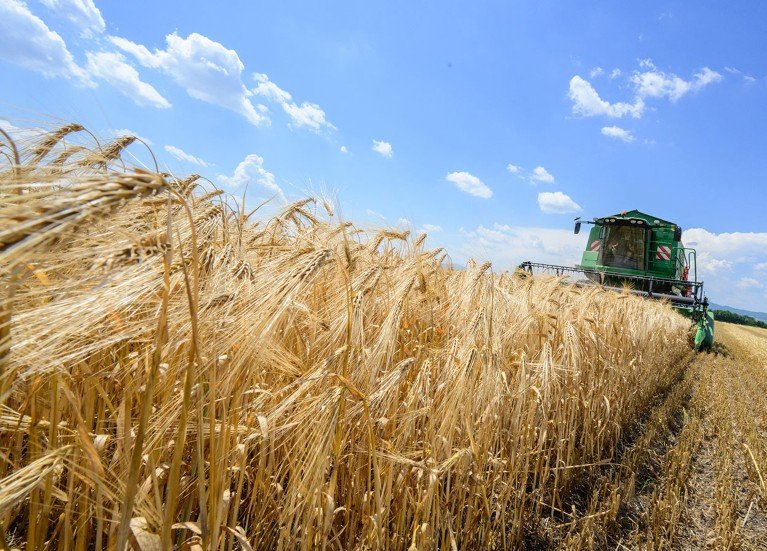
Conventional cereals and grains could be grown alongside gene-edited crops under amended EU rules.Credit: Joe Klamar/AFP via Getty In June, the European Union overturned its strict limits on the cultivation of gene-edited crops. The change comes in the wake of growing criticism that Europe lags behind other regions when it comes to adopting innovative plant
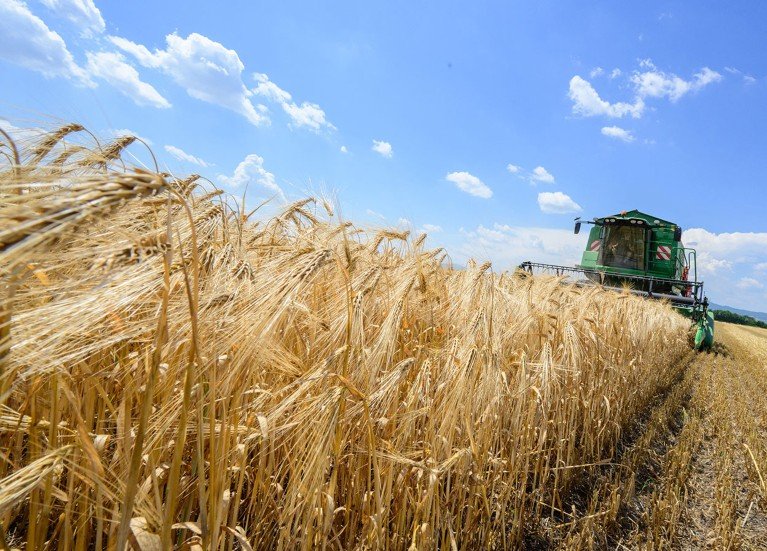
Conventional cereals and grains could be grown alongside gene-edited crops under amended EU rules.Credit: Joe Klamar/AFP via Getty
In June, the European Union overturned its strict limits on the cultivation of gene-edited crops. The change comes in the wake of growing criticism that Europe lags behind other regions when it comes to adopting innovative plant biotechnologies.

How CRISPR could yield the next blockbuster crop
Previously, all gene-edited plants were regulated as genetically modified organisms (GMOs), which sometimes incorporate DNA from other species and have raised public concern. But gene editing, using CRISPR technologies, for instance, involves only small changes to an organism’s DNA.
As a plant geneticist and agronomist, I think that the EU’s about-turn could be a game-changer for the region’s agriculture sector. But I worry that flaws in the new rules might limit their usefulness, and harm public perception of gene-edited crops.
The shift comes as climate change and geopolitical instability are putting pressure on local food security. EU pesticide bans and regulations on fertilizer use mean that there’s a need to develop crop varieties that have broad disease resistance and that use nutrients efficiently.
Gene editing can be used to instantly alter traits — such as tolerance to drought or heat — and produce crops that outperform conventional varieties. Restrictions on their use have hamstrung farmers. A 2023 impact assessment by the European Commission calculated that the annual economic loss for EU farmers could be as much as €2.7 billion (US$2.3 billion) for cereal crops by the early 2030s (see go.nature.com/4cymkvb). More-lenient rules could also help research, by stopping the brain drain and loss of intellectual property that have occurred over the past decade.

How CRISPR patent issues block Indian farmers from accessing biotech benefits
But the EU should address shortcomings in its ruling as it works on framing and communicating the new legislation.
The latest rules split gene-edited crops into two groups, called new genomic techniques 1 (NGT-1) and NGT-2 (see go.nature.com/3t3ewxt). NGT-1 crops, which can have limited alterations, are considered equivalent to plants bred through conventional means and are regulated accordingly. All other NGT plants fall under NGT-2 and remain regulated under strict GMO rules.
There are strict rules around the number of edits that NGT-1 crops can have and the number of DNA base pairs that can be changed in each edit, to align with what occurs naturally. But these constraints are arbitrary and artificial. Mutations arise randomly in nature, without limitations on type or number. What’s more, conventional breeding programmes aimed at improving several traits often involve hundreds of genetic variants.
The limits will make it hard to include several edited traits in a single crop variety, or to use gene-editing techniques to improve traits regulated by many genes, such as yield and stress resilience.
As implementation progresses, the EU should consider building in flexibility. The United States provides one example. There, crops are approved on the basis of the product rather than the breeding method used. Regulators focus on whether the characteristics of the plant pose any risks to public health or ecology, rather than on how the plant was generated and what genetic changes it has.
For more tech updates, stay tuned to our blog.