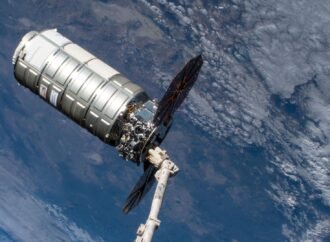
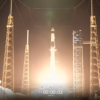
Media accreditation is open for the next launch to deliver NASA science investigations, supplies, and equipment to the International Space Station. A Northrop Grumman Cygnus XL spacecraft will launch in November to the orbital laboratory on a SpaceX Falcon 9 rocket for NASA. The mission is known as NASA’s Northrop Grumman Commercial Resupply Services 25,
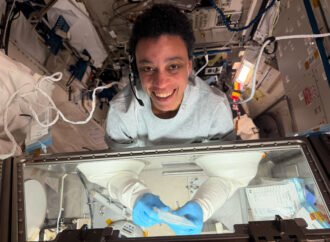
NASA astronaut and Expedition 75 flight engineer Jessica Watkins works inside the Kibo laboratory module’s Life Science Glovebox on Oct. 9, 2026, safely mixing living cell samples with a bioink and then filling a special cartridge with the cell‑ink mixture. The advanced research operations were part of the InSPA‑Auxilium Bioprinter‑Cell Printing investigation, which explores 3D
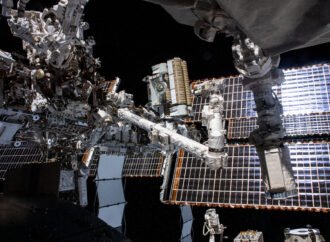
From the International Space Station’s unique position 250 miles above Earth, the Sun is a vital source of energy. Solar power supports the station’s life support systems, daily activities, and hundreds of research investigations that improve life on Earth and prepare humans for deep space exploration. Over the past five years, NASA augmented the station’s
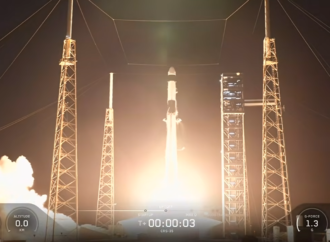
NASA’s SpaceX 35th commercial resupply mission lifted off at 6:33 a.m. EDT Tuesday aboard a Falcon 9 rocket from Space Launch Complex 40 at Cape Canaveral Space Force Station in Florida, carrying more than 6,300 pounds of supplies and hardware, bound for the International Space Station. Following its successful launch, the SpaceX Dragon spacecraft will
NASA will provide live coverage of the launch and docking of a Roscosmos cargo spacecraft carrying about three tons of food, fuel, and supplies for the crew aboard the International Space Station. The unpiloted Progress 96 resupply spacecraft is scheduled to launch at 12:15 p.m. EDT (9:15 p.m. Baikonur time), Wednesday, Sept. 9, on a
Lee esta historia en español aquí. Some of Earth’s microbes likely to hitch a ride to space with human explorers could survive in the shaded nooks and crannies of the Moon’s South Pole region, NASA scientists say. Published on Aug. 19, 2026, in Science Advances, these findings highlight a need to better understand microbial persistence