VIDEO REVIEW: Tesla Model Y L: The 6-seater variant of the popular electric SUV arrives in Australia
- AI, ai coding assistant, AI regulation, Artificial Intelligence, openai, Reviews, Tech, Technology, Tesla, Vehicles
- March 29, 2026

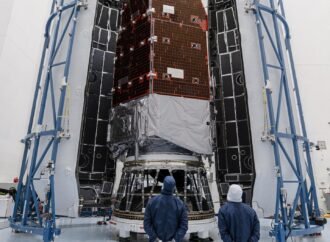
Coverage plans are ready for NASA’s Nancy Grace Roman Space Telescope prelaunch and launch activities. Roman is NASA’s next-generation observatory designed to explore some of the universe’s biggest mysteries, including dark energy. NASA and SpaceX are targeting Roman’s liftoff for no earlier than 7:26 a.m. EDT Sunday, Aug. 30, aboard a SpaceX Falcon Heavy rocket
READ MORE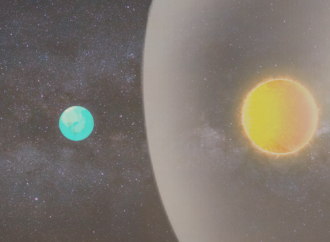
At the center of our solar system, the Sun influences every planet that orbits it. In two recent NASA-funded studies, scientists uncovered how ancient events in the Sun’s history may have helped create Earth’s unique climate and driven previously unexplained climatic shifts. In new research, scientists at NASA’s SHIELD (Solar Wind with Hydrogen Ion charge Exchange and Large-Scale Dynamics) center — one of
READ MORE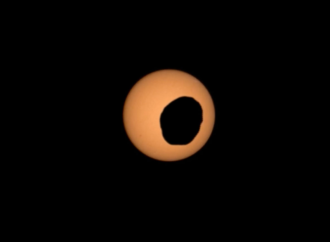
NASA’s Perseverance Mars rover used its Mastcam-Z camera to capture the silhouette of Phobos, one of the two Martian moons, as it crossed in front of the Sun on Aug. 12, 2026, the 1,948th Martian day, or sol, of the mission. The animation has been tinted to simulate what a human would see if they
READ MORE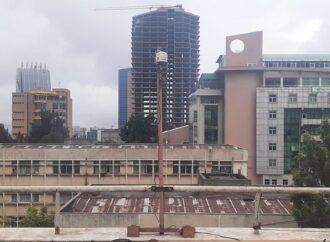
This roof-mounted air sensor in Addis Ababa, the capital of Ethiopia, is one of 10 used by NASA’s Multi-Angle Imager for Aerosols (MAIA) to study the city’s air quality. MAIA’s air sensors provide a detailed look at particulate matter that is 2.5 micrometers or less in diameter, also known as PM2.5, one of the world’s deadliest forms of
READ MORE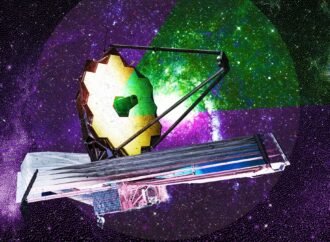
“If we consider what the James Webb Space Telescope is doing, it’s optimized towards looking at the very distant universe … but just a tiny patch of the sky,” says astrophysicist Rachel Mandelbaum of Carnegie Mellon University. “In contrast, Roman is able to look at a large area of the sky at once.” That broad
READ MORE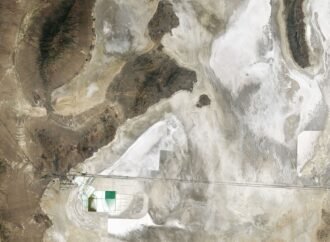
At its peak, ancient Lake Bonneville would have been a sight to behold. Nearly as large as Lake Michigan, the Ice Age lake spread across much of western Utah and parts of Nevada and Idaho. When it eventually receded, it left behind flat, bright playas and salt flats rich with minerals—a landscape that would later
READ MORE