If you’ve ever had your car start sluggishly, or not at all, on a particularly frigid winter morning, you know standard batteries do not like extreme cold. That’s why NASA researchers are working to develop a battery that could function in the brutal cold of the Moon’s South Pole, where nighttime temperatures plunge to minus
Spacecraft propulsion traditionally relies on volatile fuels and separate, bulky systems for different types of maneuvering in space. NASA is working to change that paradigm. Engineers at NASA’s Marshall Space Flight Center in Huntsville, Alabama, recently completed a rigorous series of environmental and physical tests on a new small satellite designed to make spaceflight safer
NASA celebrated the full restoration of its Guam Remote Station with a ribbon-cutting on Sept. 10, closing out more than three years of recovery after Super Typhoon Mawar devastated the site in 2023. Engineers from across the agency completed the final and most complex step of the rebuild on July 1, when they returned the
Memorial Day weekend 2024 started with a blue sky and a mild three- to four-foot chop in the water off the Gulf Coast of Mississippi — a perfect day for a fishing competition. A team of five was about 40 miles offshore checking their sonar, and 30 seconds later the boat was gone. They were in the
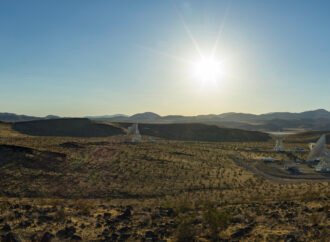
NASA’s Deep Space Network facility in California is marking the addition of a brand new 34-meter-wide (114-foot-wide) radio frequency antenna to the agency’s deep space communications and navigation system. The network uses giant dish antennas located at three global facilities to support more than 40 spacecraft exploring the solar system and interstellar space. The new
NASA has selected four university teams to help the agency transform the future of aviation through projects ranging from high-supersonic propulsion systems to low-noise routes for small aircraft flying through cities. The agency made awards through its University Leadership Initiative, which offers student teams the opportunity to contribute to real-world flight research that advances NASA’s goals in aeronautics.