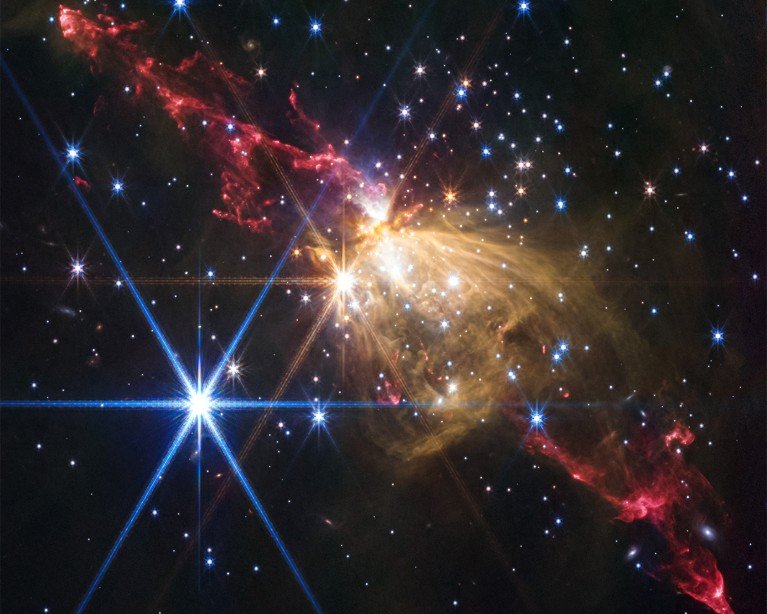
Last September, JWST took this image of a protostellar jet on the outskirts of the Milky Way. From tip to tip, the jet extends about twice the distance from the Sun to its nearest neighboring star system, α Centauri.Credit: NASA, ESA, CSA, STScI, Yu Cheng (NAOJ); Image processing: Joseph DePasquale (STScI) Of the black holes
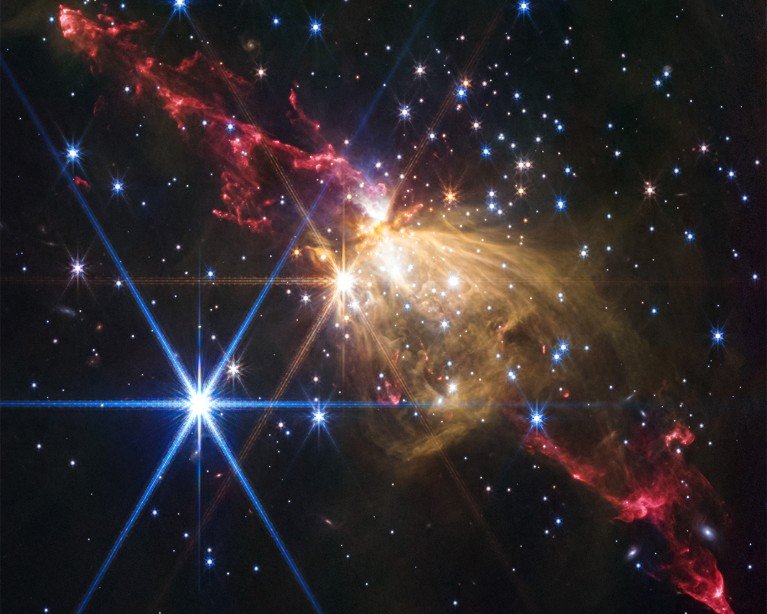
Last September, JWST took this image of a protostellar jet on the outskirts of the Milky Way. From tip to tip, the jet extends about twice the distance from the Sun to its nearest neighboring star system, α Centauri.Credit: NASA, ESA, CSA, STScI, Yu Cheng (NAOJ); Image processing: Joseph DePasquale (STScI)
Of the black holes of the early Universe1 to atmospheres that hide distant planets2The James Webb Space Telescope (JWST) studies cosmic phenomena that no other observatory has been able to probe. The most powerful infrared telescope ever built released its first images four years ago this week.
‘It’s a dream’: JWST detects more black holes than astronomers predicted
Its success is a tribute to the talent and hard work of its scientists and engineers. Conceived in 1989, it is also a testament to perseverance, often against all odds: More than once, the telescope faced cancellation as its costs skyrocketed, eventually reaching $10 billion for its construction and first five years of operation.
With four years under its belt, JWST has just one more year of primary mission operations left before NASA must approve an extension. The agency is also considering how to end another iconic observatory: the Hubble Space Telescope. Hubble observes primarily at optical and ultraviolet wavelengths and has reshaped astronomers’ understanding of how stars and galaxies are born, evolve, and die.
There is still a lot of science to be done with both telescopes and both need to be renewed. Hubble costs about $98 million to operate each year, and JWST about $200 million each year. These are small figures given the immense scientific return. Telescopes complement each other wonderfully: not renewing them would be like building transformative AI technology and then disconnecting it from the Internet so it can’t be used.
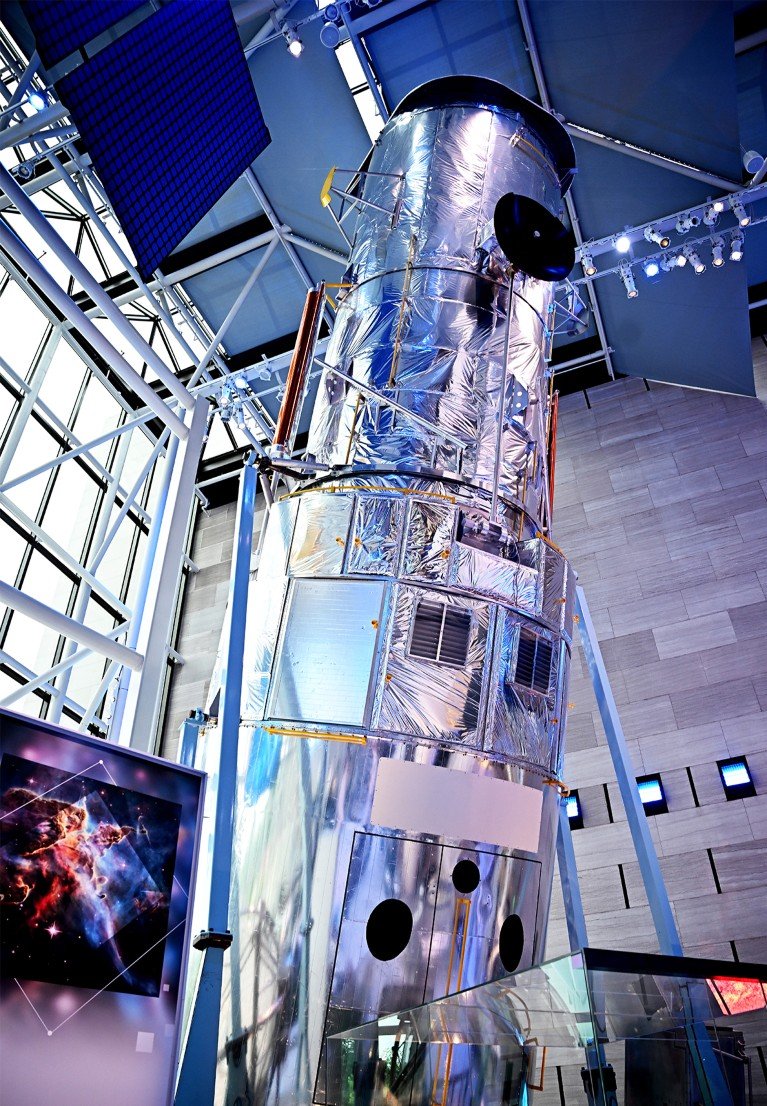
A full-scale mockup of the 50-year-old Hubble Space Telescope went on display last month at the Smithsonian National Air and Space Museum in Washington, DC.Credit: Shannon Finney/Getty
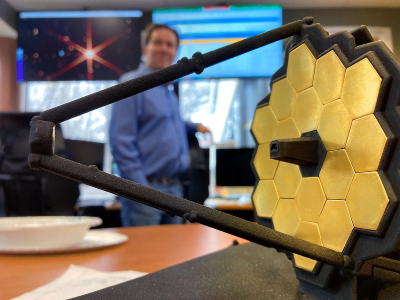
As an infrared telescope, JWST observes wavelengths at the redder end of the electromagnetic spectrum. Because the expansion of the Universe redshifts light, JWST has an unprecedented view of the most distant realms of the cosmos, where objects appear just as they appeared shortly after the Universe was born in the Big Bang, 13.8 billion years ago. This view is thanks in large part to a host of features built through technological and engineering firsts, from the 6.5 meter wide folding main mirror to a tennis court-sized sunshade.
Among its discoveries, JWST has detected small, distant black holes, whose existence challenges ideas about how black holes form. It has found some of the most distant galaxies ever observed, including star systems that are larger and brighter than astronomers would have expected in the early Universe. Closer to home, JWST discovered a lava world with an incredibly humid atmosphere; looked through dusty disks at the planets being born; and measured the chemical composition of an interstellar visitor, comet 3I/ATLAS, which passed close to the Sun late last year.3.
First images from world’s largest digital camera leave astronomers amazed
The success of both telescopes is evidence of an overall international and multidisciplinary research collaboration. Hubble is a collaboration between NASA and the European Space Agency (ESA). Similarly, NASA led JWST, with ESA providing a key instrument and the launch vehicle, among other things. The Canadian Space Agency built another crucial instrument in addition to sensors that keep the telescope pointed precisely into space.
The collaborations not only pioneer excellence in engineering and science, but also attempt to do so with a strong ethical compass. Together with NASA, leaders at the Space Telescope Science Institute in Baltimore, Maryland, which operates both Hubble and JWST, are working to counter biases that can distort access to large scientific facilities.
In 2018, the committees that allocate time to use Hubble switched to a dual anonymous review process, in which neither the applicant nor the reviewer know who the other is. This change led to a substantial increase in the acceptance of proposals from female principal investigators.4and now the same system is used for JWST.
These six distant galaxies captured by JWST are captivating astronomers
Looking ahead, JWST will need to be part of a new ecosystem of sky-observing telescopes. Notably, the US National Science Foundation and the Department of Energy’s Vera C. Rubin Observatory began their ten-year study from Chile last month, and NASA aims to launch the Nancy Grace Roman Space Telescope next month. Both telescopes will scan large areas of the cosmos and identify oddities that JWST can then identify. The European Space Agency’s Euclid mission, launched in 2023, is deeply exploring similar questions. China plans to launch a telescope about the size of Hubble for its own study of the heavens next year.
How to stay relevant as the research landscape changes is a challenge familiar to any manager of a major scientific project. Here, JWST teaches lessons. It’s important to build something distinctive and powerful enough to truly open up a space of discovery. Having large facilities is good; having a transformational one is much better. Since its inception, JWST has proven its strength as new astronomical fields, such as exoplanet science, emerged, and its instruments were powerful enough and its scientists quick enough to adapt. Many criticized JWST’s immense ambition, which contributed to the technological problems that plagued its development. But that scientific vision is now bearing fruit in spades.
In an era of global cuts and threats to basic science, both Hubble and JWST radiate achievements. This can be an example for any scientific leader, in any discipline, who wants to get a very ambitious project off the ground. The message of both is to dream big and then achieve.
For more tech updates, stay tuned to our blog.